
# What Is the Best Golden Triangle and Ranthambore Tour?
The **Golden Triangle and Ranthambore Tour** is one of the best ways to experience the incredible variety of northern India in a single journey. The classic Golden Triangle connects **Delhi, Agra, and Jaipur**, three destinations famous for historic monuments, Mughal and Rajput architecture, colorful markets, local cuisine, and centuries of cultural heritage. Adding Ranthambore National Park introduces an entirely different side of India: wildlife, forests, lakes, ancient ruins, and the possibility of seeing a Bengal tiger in its natural habitat.
This combination works particularly well for travelers who don't want to choose between India's famous monuments and its wildlife. You can begin in the busy streets and historic neighborhoods of Delhi, admire the Taj Mahal in Agra, explore the forts and palaces of Jaipur, and then travel into Rajasthan's wilderness at Ranthambore.
A well-designed itinerary usually takes **5 to 7 days**, depending on how much time you want to spend in each destination. A shorter trip can cover the major highlights, while a longer itinerary gives you more opportunities for wildlife safaris and relaxed sightseeing.
## What Is the Golden Triangle and Ranthambore Route?
The classic route generally follows:
<strong>Delhi → Agra → Ranthambore → Jaipur → Delhi</strong>
This route is popular because the destinations connect naturally by road and rail, while each stop offers a completely different experience.
Delhi introduces travelers to India's capital and its mixture of Mughal, colonial, religious, and modern landmarks. Agra is home to the Taj Mahal and other important Mughal monuments. Ranthambore provides an opportunity to explore one of India's best-known wildlife destinations. Jaipur completes the journey with magnificent forts, palaces, markets, and Rajasthan's distinctive culture.
Instead of spending the entire holiday visiting similar monuments, the itinerary constantly changes. One day you may be photographing marble architecture, and the next morning you could be looking for a tiger in the forest.
That variety is one of the biggest reasons travelers choose a <strong>Ranthambore Tour</strong> alongside the Golden Triangle.
## Why Add Ranthambore to the Golden Triangle?
The traditional Golden Triangle is already an excellent introduction to India, but adding Ranthambore makes the journey more diverse.
The major cities are dominated by architecture and history. Ranthambore shifts the focus toward nature and wildlife. The national park is particularly famous for its Bengal tiger population, although tiger sightings are never guaranteed.
The park also contains other wildlife, including leopards, sloth bears, sambar deer, chital, wild boar, crocodiles, and numerous bird species. The landscape combines dry deciduous forests, grasslands, lakes, and historic structures.
Ranthambore Fort is another major attraction. Located within the broader landscape of the national park, the fort adds a historical dimension to what might otherwise be purely a wildlife experience.
This combination makes the trip appealing to couples, families, photographers, history enthusiasts, and first-time visitors who want to experience several sides of India in one itinerary.
## What Is the Best Duration for the Tour?
For most travelers, **6 days and 5 nights** is a good balance between sightseeing and travel.
A sample itinerary could look like this:
<strong>Day 1:</strong> Delhi sightseeing and overnight in Delhi
<strong>Day 2:</strong> Delhi to Agra, Taj Mahal and Agra Fort
<strong>Day 3:</strong> Agra to Ranthambore, with an optional stop at Fatehpur Sikri
<strong>Day 4:</strong> Ranthambore wildlife safaris
<strong>Day 5:</strong> Ranthambore to Jaipur and Jaipur sightseeing
<strong>Day 6:</strong> Jaipur sightseeing and return to Delhi
If wildlife is your primary interest, extending the trip to seven or eight days is even better. Additional time in Ranthambore gives you more safari opportunities, which can improve your chances of encountering a wider range of wildlife.
If monuments are your priority, you can spend additional time in Agra or Jaipur instead.
## Day 1: Exploring Delhi
Start the journey in Delhi, India's enormous capital city.
Depending on your arrival time, you can explore attractions such as India Gate, Humayun's Tomb, Qutub Minar, the Red Fort, Jama Masjid, and the historic neighborhoods of Old Delhi.
Trying to visit every major attraction in one day isn't necessary. Choose a few landmarks based on your interests and leave enough time to enjoy the city.
Old Delhi is particularly interesting for travelers who want to experience traditional food and busy market streets. Qutub Minar and Humayun's Tomb are better choices for travelers interested in architecture and history.
If you arrive in Delhi late in the day, simply check into your hotel and begin sightseeing early the next morning.
The advantage of starting in Delhi is that you can gradually move south toward Agra and then deeper into Rajasthan.
## Day 2: Delhi to Agra
Leave Delhi early and travel toward Agra.
The road journey typically takes several hours depending on traffic and your starting location. Train travel is another excellent option for travelers who prefer public transportation.
Once you arrive in Agra, the **Taj Mahal** should be the main priority.
The monument is especially impressive in the morning when the marble reflects softer natural light. After visiting the Taj Mahal, continue to Agra Fort, where you can explore courtyards, palaces, mosques, and other structures associated with the Mughal Empire.
If time allows, visit another attraction such as Mehtab Bagh or Itimad-ud-Daulah.
Spending the night in Agra is preferable to immediately rushing toward Ranthambore. It gives you enough time to enjoy the Taj Mahal and allows you to begin the next stage of the journey without unnecessary pressure.
## Day 3: Agra to Ranthambore
The journey from Agra to Ranthambore is one of the most interesting parts of the itinerary because you can potentially combine transportation with sightseeing.
A popular stop along the route is **Fatehpur Sikri**, the historic Mughal city located near Agra.
Fatehpur Sikri's red sandstone architecture provides a strong contrast with the white marble of the Taj Mahal. Its courtyards, gateways, palaces, and religious structures reveal another aspect of Mughal history.
After exploring Fatehpur Sikri, continue toward Ranthambore.
Depending on your transportation and departure time, you may arrive in the evening. Check into your hotel or wildlife resort, have dinner, and prepare for an early start the following morning.
Ranthambore safaris often take place during the cooler morning or afternoon periods, so a good night's rest is important.
## Day 4: Ranthambore National Park
This is the day wildlife enthusiasts usually look forward to most.
A typical Ranthambore itinerary includes a **morning safari and/or afternoon safari**. Safaris are conducted in designated zones, and visitors travel in authorized safari vehicles accompanied by trained personnel.
The main attraction is the Bengal tiger, but the park is home to many other animals and birds.
Don't judge the experience solely by whether you see a tiger. Wildlife sightings are unpredictable, and the forest itself is part of the experience.
You may see deer moving through grasslands, crocodiles near lakes, birds in the trees, or monkeys along the road. Even when a tiger doesn't appear, tracking animal movement and listening to the forest can make the safari memorable.
If wildlife is your main reason for adding Ranthambore, consider staying for at least two nights and booking multiple safari drives.
## How Many Safaris Should You Take?
There is no guaranteed number of safaris that will produce a tiger sighting.
However, **two to four safari drives** can provide a better wildlife experience than taking only one.
Each safari is different. Weather, animal movement, time of day, zone allocation, and luck all influence what you see.
A single safari may produce an unforgettable tiger encounter, while another trip with several safaris may not result in a sighting.
The best approach is to treat every safari as an opportunity to experience the ecosystem rather than purchasing the trip solely as a tiger-spotting exercise.
If you have a strong interest in wildlife photography, additional safaris are especially worthwhile because each drive provides different lighting and wildlife opportunities.
## What Is the Best Time for a Ranthambore Safari?
The best time depends on whether you prioritize comfortable weather, wildlife activity, or maximum visibility.
The cooler months from **October through March** are popular because temperatures are generally more comfortable for visitors.
April and May can be extremely hot, but dry conditions can sometimes make animals easier to spot around remaining water sources.
The monsoon period can affect park accessibility and safari operations, so travelers should check the current seasonal rules before booking.
For a combined Golden Triangle itinerary, the cooler months are generally the easiest period for sightseeing in Delhi, Agra, Jaipur, and Ranthambore.
## Day 5: Ranthambore to Jaipur
After your safari experience, continue toward Jaipur.
Depending on your schedule, you can leave Ranthambore after breakfast or after a morning safari.
Jaipur is very different from Agra. Instead of Mughal monuments, the city showcases the heritage of Rajasthan's Rajput rulers.
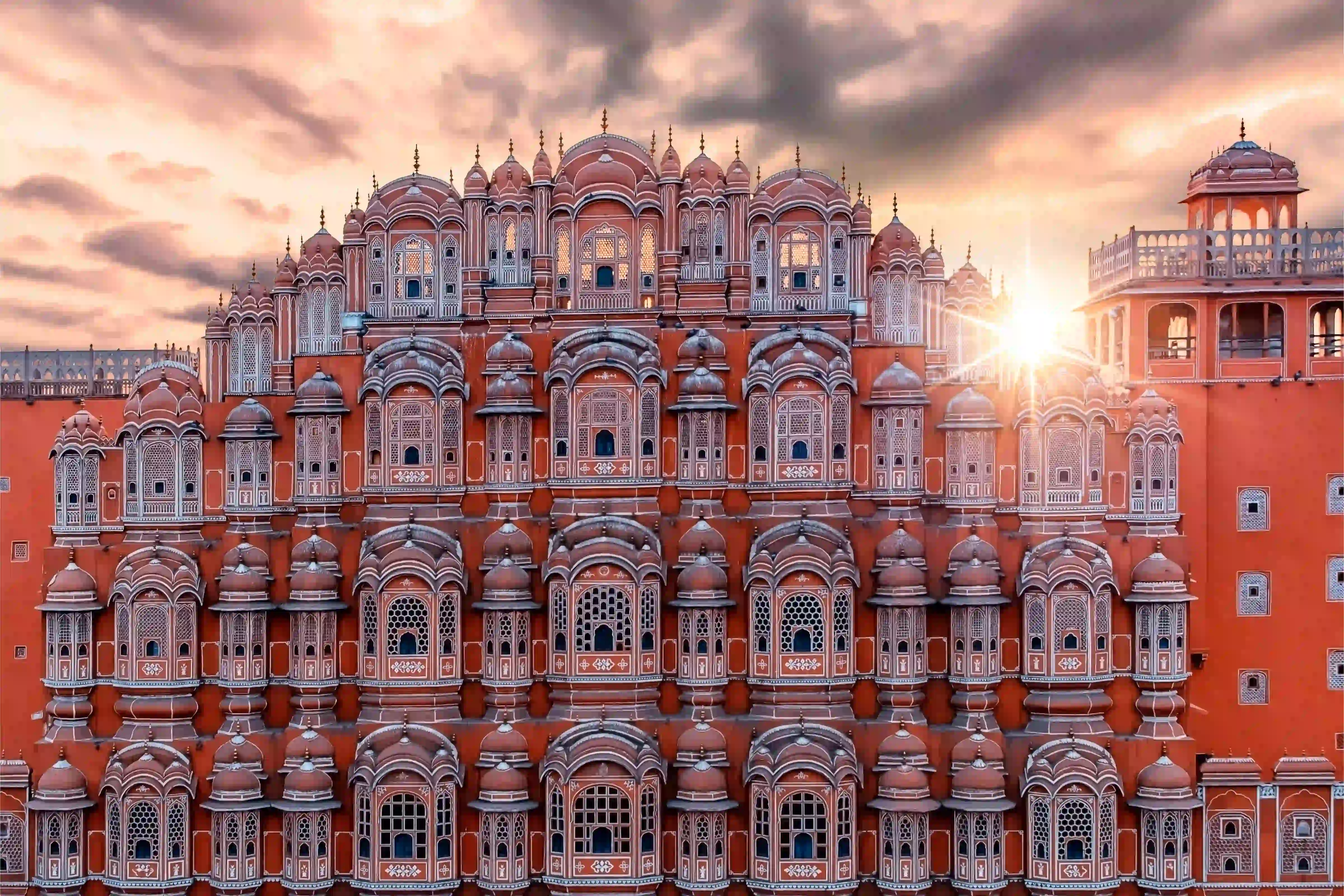
The city's most famous attractions include **Amber Fort, City Palace, Hawa Mahal, and Jantar Mantar**.
If you arrive in Jaipur during the afternoon, focus on one or two attractions rather than attempting to see everything.
The evening is ideal for exploring local markets and enjoying Rajasthani cuisine.
## Day 6: Jaipur Sightseeing
Spend the final full day exploring Jaipur.
Start with Amber Fort if you didn't visit it the previous day. The massive hilltop complex is one of the city's most impressive landmarks.
Continue toward the center of Jaipur to see Hawa Mahal and City Palace.
Jantar Mantar is another worthwhile stop for travelers interested in science and history. The historic astronomical instruments demonstrate the sophistication of early astronomical observation in India.
Leave some time for shopping. Jaipur is known for textiles, jewelry, handicrafts, block-printed fabrics, blue pottery, and traditional Rajasthani products.
In the evening, you can enjoy a final dinner before returning to Delhi the following day.
## Should You Travel by Private Car or Train?
For this particular itinerary, **private transportation is often the most convenient option**.
The route involves several transfers, and a private vehicle eliminates the need to repeatedly arrange taxis between railway stations and hotels.
A private car also allows you to stop at Fatehpur Sikri and other attractions along the way.
This flexibility is especially valuable for families, couples, and travelers carrying substantial luggage.
Train travel can be cheaper and efficient between major cities, but you'll need to coordinate station transfers and work around fixed schedules.
A combination can also work well. For example, you could take a fast train from Delhi to Agra and then use private transportation for the Agra-Ranthambore-Jaipur portion.
## What Makes the Tour Different from a Traditional Golden Triangle Trip?
A traditional Golden Triangle journey focuses primarily on history and architecture.
Adding Ranthambore changes the rhythm of the holiday.
Instead of spending every day inside urban environments, you get a chance to wake up before sunrise, enter a forest, travel through grasslands, and observe wildlife.
The contrast can make the entire journey more memorable.
After walking through the Taj Mahal and exploring Mughal architecture in Agra, seeing a tiger or deer in the wild creates a completely different kind of travel memory.
This is why the combination works particularly well for travelers who want both cultural sightseeing and adventure.
## Is Ranthambore Suitable for Families?
Yes, Ranthambore can be an exciting addition to a family holiday.
Children who might become tired of visiting monuments can find a safari much more engaging. Searching the landscape for animals creates an interactive experience that is very different from traditional sightseeing.
However, safari vehicles can involve long periods of sitting, and sightings are unpredictable. Younger children should therefore be prepared for the possibility of spending several hours in the vehicle without seeing a major animal.
Families should also consider the weather. Summer conditions can become extremely hot, while winter mornings can be cold.
Choose clothing and safari timing accordingly.
## Is the Tour Good for Couples?
The Golden Triangle combined with Ranthambore is particularly appealing for couples.
The itinerary provides a mixture of romantic architecture, luxury hotels, historic cities, scenic drives, and wildlife experiences.
A sunrise visit to the Taj Mahal can be followed by a peaceful evening at a heritage hotel in Agra. Ranthambore then adds an adventurous element before Jaipur brings the journey back to colorful markets and royal architecture.
Couples can also choose boutique heritage accommodations and private transportation to make the trip more comfortable.
## What Should You Pack for the Tour?
Because the itinerary includes cities, monuments, and wildlife areas, versatile clothing is useful.
Essential items include:
<ul>
<li>Comfortable walking shoes</li>
<li>Lightweight clothing for warm weather</li>
<li>A warm layer for winter mornings</li>
<li>Sunglasses and sunscreen</li>
<li>A hat or cap</li>
<li>Reusable water bottle</li>
<li>Camera or smartphone</li>
<li>Identification and travel documents</li>
<li>Small day bag</li>
<li>Binoculars for wildlife viewing</li>
</ul>
For safaris, neutral and comfortable clothing is generally practical.
Avoid packing excessive luggage because you'll be changing destinations frequently.
## What Is the Best Season for the Golden Triangle and Ranthambore?
For the combined itinerary, **October through March** is generally the most comfortable period.
The weather is usually more pleasant for sightseeing in Delhi, Agra, and Jaipur, while Ranthambore can also be enjoyable during the cooler season.
November through February can bring cooler mornings and occasional fog in northern India. Fog may affect visibility around Delhi and Agra.
March is often a good transition period before temperatures rise significantly.
April and May can be very hot but may appeal to wildlife enthusiasts who are prepared for high temperatures.
June through September brings monsoon conditions, which can affect travel plans and wildlife park operations.
## How Much Does a Golden Triangle and Ranthambore Tour Cost?
The total cost depends on your choice of hotels, transportation, safari type, guides, and travel season.
A budget trip can use trains, simple hotels, and shared safari vehicles.
A mid-range itinerary can combine private transportation, comfortable hotels, and organized safaris.
Luxury travelers can choose five-star hotels, heritage properties, private vehicles, private guides, and premium safari arrangements.
Before booking, ask exactly what the package includes.
Check whether the price covers:
<ul>
<li>Accommodation</li>
<li>Private transportation</li>
<li>Fuel and tolls</li>
<li>Monument entrance fees</li>
<li>Safari permits</li>
<li>Safari vehicle charges</li>
<li>Professional guides</li>
<li>Meals</li>
<li>Driver expenses</li>
</ul>
Understanding inclusions in advance prevents unpleasant surprises later.
## How to Choose the Best Tour Package
When comparing tour packages, don't look only at the headline price.
Check the number of nights in each destination, the quality and location of hotels, the number of included safaris, and the type of transportation.
A package that includes only one safari may be cheaper, but it may not be ideal if wildlife is your primary reason for visiting Ranthambore.
Similarly, a very cheap transportation package may use shared vehicles or impose a rigid itinerary.
A good <strong>Ranthambore Tour</strong> should provide enough flexibility for the traveler to enjoy both the national park and the surrounding destinations.
Ask whether the itinerary can be customized before booking.
## Golden Triangle and Ranthambore Tour for First-Time Visitors
For first-time visitors to India, this route offers an excellent introduction.
Delhi demonstrates the scale and diversity of modern India.
Agra provides the country's most recognizable monument and an extraordinary concentration of Mughal heritage.
Ranthambore introduces India's wildlife and natural landscapes.
Jaipur provides a colorful introduction to Rajasthan.
The result is a balanced journey rather than a holiday focused on one type of attraction.
You experience cities, villages, historic monuments, wildlife, food, markets, and different architectural traditions within a single trip.
## Tips for a Smooth Journey
Start major sightseeing early whenever possible. Morning hours are usually more comfortable, particularly in warmer months.
Keep your itinerary realistic. Long-distance travel takes time, and adding too many attractions can make the journey exhausting.
Book popular accommodations and safaris ahead of time during busy travel periods.
Keep some flexibility in your schedule, particularly around wildlife safaris and road journeys.
Always confirm current monument opening hours, safari availability, entry rules, and transportation schedules before departure because these can change.
Most importantly, don't measure the success of the trip only by how many attractions you visit.
A relaxed lunch, an unexpected wildlife sighting, or a quiet moment overlooking a historic monument can become one of the best memories of the entire journey.
## Is the Golden Triangle and Ranthambore Tour Worth It?
For travelers who want more than a conventional sightseeing holiday, the answer is **yes**.
The combination offers an unusually broad range of experiences.
You can admire the Taj Mahal at sunrise, explore ancient Mughal architecture, walk through Jaipur's royal complexes, and then enter Ranthambore's forests in search of wildlife.
Few short itineraries offer such a dramatic combination of history, architecture, culture, and nature.
The trip is especially worthwhile if you have at least six days. With additional time, you can slow down, add more safari drives, and enjoy the destinations without constantly checking the clock.
## Final Thoughts
The best Golden Triangle and Ranthambore itinerary is one that balances **Delhi's history, Agra's Mughal heritage, Ranthambore's wildlife, and Jaipur's royal culture** without trying to do everything in a hurry.
A route such as <strong>Delhi → Agra → Ranthambore → Jaipur → Delhi</strong> provides a natural progression and allows you to experience several completely different sides of northern India.
For most travelers, six to seven days is an excellent duration. Start with Delhi, dedicate enough time to the Taj Mahal and Agra Fort, travel through Fatehpur Sikri toward Ranthambore, allow multiple opportunities for safaris, and finish in Jaipur.
If wildlife is your main interest, spend extra nights in Ranthambore. If architecture and history are more important, add additional time in Agra and Jaipur.
A carefully planned Ranthambore Tour can transform a standard Golden Triangle holiday into a much richer Indian adventure.
The most important thing is to choose a schedule that matches your interests rather than simply selecting the shortest possible package. India rewards travelers who slow down enough to appreciate the details.
Whether you're watching the Taj Mahal change color in the morning light, exploring a centuries-old fort, walking through Jaipur's colorful markets, or waiting quietly for wildlife to emerge from the forest, this journey can provide an unforgettable introduction to northern India.


