
India is a country where history, architecture, food, religion, art, and everyday life are woven together in ways that can surprise you at every turn. For a first-time visitor, however, deciding where to begin can be difficult. India is enormous, and trying to cover too many regions during one vacation can leave you spending more time in airports, railway stations, and vehicles than actually enjoying the country. That is one reason the classic Delhi, Agra, and Jaipur circuit remains such a practical introduction to northern India.
An India Golden Triangle Tour brings together three destinations that offer remarkably different experiences within a relatively manageable travel route. Delhi introduces you to India's capital, with its layers of Mughal, colonial, and contemporary history. Agra takes you into the world of Mughal architecture, where the Taj Mahal naturally becomes the centerpiece. Jaipur then changes the mood completely, surrounding you with Rajasthan's forts, palaces, colorful bazaars, royal traditions, and distinctive architectural style.
The real beauty of this journey is the contrast. You aren't visiting three cities that feel identical. Instead, each destination adds another piece to the story. Delhi is energetic and enormous, Agra feels deeply connected with the Mughal era, and Jaipur brings a colorful royal character that is unmistakably Rajasthani.
Whether you have three days or a full week, this guide explains how to plan the route, what to see, how to travel, where to stay, what to eat, when to visit, and how to make your journey more comfortable.
The Golden Triangle is one of India's best-known tourist circuits, connecting Delhi, Agra, and Jaipur.
The name comes from the roughly triangular shape created when the three cities are connected on a map. More importantly, the route works because each destination offers a different cultural and historical experience.
Delhi is India's capital and one of the country's most historically layered cities. Its attractions range from medieval monuments and Mughal architecture to colonial-era landmarks and modern urban districts.
Agra is famous worldwide for the Taj Mahal but also contains other important Mughal monuments, including Agra Fort.
Jaipur is the capital of Rajasthan and is widely known as the Pink City. It offers magnificent forts, royal palaces, astronomical architecture, traditional markets, and colorful handicrafts.
The route is particularly attractive for international travelers because Delhi has major air connections and the three destinations can be connected by road or rail.
The biggest reason to choose this circuit is variety.
Imagine beginning your vacation among the enormous avenues and historic monuments of Delhi, then standing beneath the white marble domes of the Taj Mahal, and finally arriving in Jaipur surrounded by sandstone forts and colorful bazaars.
That's a remarkable amount of contrast within one journey.
An India Golden Triangle Tour is especially suitable for first-time visitors because it provides an introduction to several important aspects of Indian history and culture without requiring extensive domestic flights.
The route also works for different travel styles.
Couples can enjoy romantic experiences and heritage hotels.
Families can explore major monuments and local markets.
Solo travelers can combine guided sightseeing with independent exploration.
Photographers can find architecture, street scenes, landscapes, and cultural details almost everywhere.
History enthusiasts can explore several centuries of political and architectural development.
The ideal length depends on how quickly you like to travel.
Three days is possible, but the itinerary will be busy.
Four days creates a better balance.
Five days gives you more flexibility.
Six or seven days allows you to slow down and add additional experiences.
Trip LengthRecommended Experience3 DaysMajor highlights only4 DaysBalanced Golden Triangle5 DaysMore relaxed sightseeing6–7 DaysDeeper exploration and optional additions8+ DaysGolden Triangle plus Rajasthan extensions
If this is your first visit to India, four or five days can be an excellent starting point.
Delhi is more than just the starting point.
It is a destination that deserves attention.
The city has been shaped by numerous dynasties, rulers, migrations, political movements, and cultural influences. As a result, you can encounter monuments from very different historical periods within a relatively short distance.
At the same time, Delhi is thoroughly modern.
Its metro system, business districts, shopping centers, restaurants, cafés, and contemporary neighborhoods show another side of India.
This contrast is one of the city's biggest attractions.
Qutub Minar is one of Delhi's most recognizable historic landmarks.
The towering structure and surrounding archaeological complex provide an excellent introduction to the city's medieval history.
Take time to explore the surrounding monuments rather than simply photographing the tower.
The stonework, inscriptions, arches, and architectural details provide clues about the different periods represented within the complex.
Humayun's Tomb is another major Delhi attraction.
Its formal gardens, symmetry, sandstone architecture, and marble detailing make it particularly appealing to architecture lovers.
The monument is also important in the development of Mughal architectural traditions.
If you enjoy photography, early morning or late afternoon can provide attractive natural light.
The Red Fort provides a very different experience.
The massive red sandstone complex was associated with Mughal imperial power and contains courtyards, halls, palaces, and other structures.
If your primary interest is Mughal history, it deserves a place near the top of your Delhi itinerary.
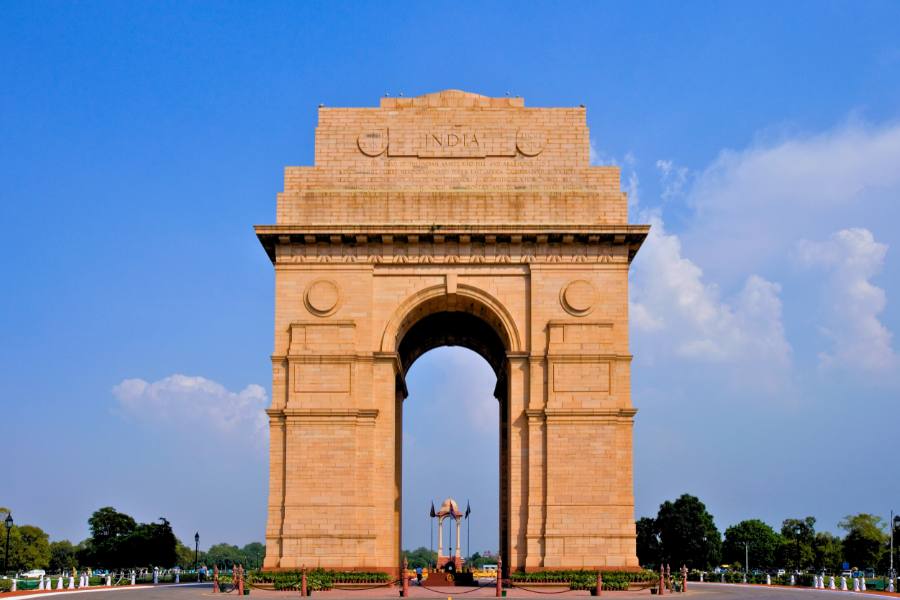
India Gate is one of the most recognizable landmarks in central Delhi.
The monument is particularly lively in the evening, when local visitors gather around the surrounding areas.
You can combine a visit with a drive through central Delhi.
Don't spend your entire Delhi visit looking only at monuments.
Food is an important part of the city's identity.
You can try North Indian classics, Mughlai dishes, kebabs, parathas, chaat, sweets, and cuisines from different parts of India.
Street food can be tempting, but first-time visitors should choose busy, reputable vendors and pay attention to basic hygiene.
For a more relaxed experience, Delhi also has an enormous selection of restaurants ranging from casual local establishments to high-end dining rooms.
From Delhi, continue to Agra.
The city is best known internationally because of the Taj Mahal, but focusing only on that monument would mean missing much of Agra's historical significance.
Agra became an important center during the Mughal period and contains several monuments connected with the empire.
For most travelers, the ideal Agra itinerary includes the Taj Mahal, Agra Fort, and, if time permits, Mehtab Bagh or another nearby heritage attraction.
The Taj Mahal is the undisputed centerpiece of Agra.
Commissioned by Mughal emperor Shah Jahan in memory of Mumtaz Mahal, the monument is recognized as a UNESCO World Heritage Site and remains one of the world's most famous examples of Mughal architecture.
The official Incredible India visitor information currently states that the Taj Mahal opens 30 minutes before sunrise and closes 30 minutes before sunset, with regular visitor access closed on Fridays. Travelers should verify current information before visiting because schedules and ticket procedures can change.
The early morning is particularly appealing.
The soft light can make the marble appear to change color, and cooler temperatures can make walking around the complex more comfortable.
Don't rush through the experience.
Look carefully at the marble inlay, carved screens, calligraphy, gardens, gateways, and symmetry.
The Taj Mahal is impressive from a distance, but its details become increasingly fascinating as you move closer.
After visiting the Taj Mahal, Agra Fort provides another perspective on Mughal history.
The enormous red sandstone complex served as a major imperial residence and center of political power.
Inside, you'll encounter courtyards, palaces, audience halls, mosques, and other historic structures.
The fort also offers views toward the Taj Mahal from certain locations.
That visual connection is fascinating because it places the two monuments within the same historical landscape.
While the Taj Mahal is often associated with love and remembrance, Agra Fort communicates political authority, royal life, administration, and defense.
If your schedule permits, consider visiting Mehtab Bagh.
The garden lies across the Yamuna River from the Taj Mahal and provides a different viewpoint.
It can be especially appealing around sunset.
For photographers, the location offers opportunities to capture the Taj Mahal within a broader landscape rather than relying only on the traditional frontal composition.
Agra also has a strong handicraft tradition.
You may encounter marble inlay products, leather goods, textiles, decorative items, and souvenirs.
If you are interested in purchasing handicrafts, take time to compare craftsmanship and prices.
Don't assume that every item described as handmade or antique is necessarily what it claims to be.
A reputable shop can make the buying experience considerably easier.
After Agra, the journey continues toward Jaipur.
The atmosphere changes almost immediately.
Jaipur is Rajasthan's capital and is widely known as the Pink City.
The city was founded in 1727 by Maharaja Sawai Jai Singh II and is known for its planned historic layout.
Rajasthan Tourism highlights attractions such as Amber Palace, City Palace, Hawa Mahal, and Jantar Mantar among Jaipur's major heritage sites.
Jaipur's architecture combines Rajput traditions with influences from other architectural cultures, creating a visual style that feels different from both Delhi and Agra.
Begin your Jaipur sightseeing with Amber Fort.
The fort is located approximately 11 kilometers from central Jaipur and is one of the city's most important attractions.
The palace complex includes courtyards, gardens, audience halls, temples, decorative rooms, and impressive gateways.
Rajasthan Tourism describes Amber Palace as combining Hindu and Mughal architectural influences and highlights its use of sandstone and marble.
The surrounding landscape adds another dimension.
The fort rises among hills and overlooks Maota Lake, creating a dramatic setting.
Arrive early if possible.
Morning temperatures are generally more comfortable, and the earlier start gives you more time for the rest of the day's sightseeing.
After Amber Fort, make a short stop at Jal Mahal.
The palace appears to sit in the middle of Man Sagar Lake and is one of Jaipur's most photographed landmarks.
Most visitors view it from the roadside.
You don't need to spend a long time here, making it an easy addition to your Jaipur sightseeing route.
Continue to City Palace.
The complex contains courtyards, museums, royal buildings, decorative architecture, and historic collections.
It is a good place to learn more about Jaipur's former royal traditions.
Depending on your interests, you can spend significant time exploring the museum sections and architectural details.
Don't rush this attraction if you enjoy history and decorative arts.
Jantar Mantar is located close to City Palace.
The observatory contains large astronomical instruments designed to measure time and observe celestial positions.
The scale of the instruments makes the site particularly unusual.
Instead of seeing scientific equipment inside a small museum, you walk among enormous architectural structures that were designed for astronomical calculations.
Rajasthan Tourism recognizes Jaipur's Jantar Mantar as a UNESCO World Heritage Site.
Hawa Mahal is perhaps Jaipur's most instantly recognizable building.
The Palace of Winds is famous for its intricate façade filled with small windows and decorative openings.
The structure was designed to allow women of the royal household to observe street life without being seen from outside.
The surrounding streets are just as interesting as the building itself.
Walk around the area and observe the shops, traffic, colors, architecture, and everyday activity.
This is where historic Jaipur and contemporary Jaipur meet.
Shopping can be an enjoyable part of your Jaipur experience.
The city is known for textiles, block-print fabrics, jewelry, handicrafts, blue pottery, decorative products, and traditional clothing.
Popular areas include Johari Bazaar and Bapu Bazaar.
Take your time comparing products.
If you're buying jewelry or expensive handicrafts, ask about materials, authenticity, return policies, and receipts.
A little patience can make the difference between a memorable purchase and an unnecessary expense.
A practical itinerary for first-time visitors might look like this:
DayDestinationMain ExperiencesDay 1DelhiQutub Minar, Humayun's Tomb, India Gate, Red FortDay 2Delhi → AgraTravel, Taj Mahal, Agra FortDay 3Agra → JaipurOptional Fatehpur Sikri, travel to JaipurDay 4JaipurAmber Fort, Jal Mahal, City Palace, Jantar Mantar, Hawa MahalDay 5JaipurShopping or additional sightseeing/departure
This itinerary can be adjusted according to your arrival and departure flights.
Transportation is one of the most important planning decisions.
You can use a private car, trains, or a combination of both.
A private vehicle is convenient because it offers flexibility.
You can travel directly between hotels and attractions, stop for refreshments, and leave your luggage in the vehicle.
This is particularly useful for families and travelers with limited time.
Before booking, clarify whether fuel, tolls, parking, driver charges, interstate taxes, and sightseeing transfers are included.
Train travel is another popular option.
It can be efficient between major cities and provides an interesting travel experience.
However, you need to account for station transfers and luggage.
For a short itinerary, convenience can sometimes be more important than saving a small amount of money.
You don't necessarily have to choose one method for the entire trip.
Some travelers use trains for one intercity journey and a private car for another.
This can provide a good balance between convenience and travel experience.
Weather plays an important role in planning your trip.
The cooler period from approximately October through March is generally popular for sightseeing.
November through February can provide pleasant daytime temperatures, although winter mornings and evenings may be chilly.
April through June can be extremely hot.
If you travel during this period, start sightseeing early and take breaks during the afternoon.
The monsoon season can bring rain and humidity, but it also changes the appearance of the landscape and can provide relief from summer temperatures.
The best time ultimately depends on your priorities.
There is no single price for this itinerary.
Your total budget depends on:
A budget traveler using trains and simple hotels may spend significantly less than someone booking luxury accommodation and a private chauffeur-driven vehicle.
When comparing packages, look beyond the advertised price.
Check the inclusions carefully.
Package ComponentQuestions to AskHotelsWhat category and location?VehicleWhat type of car?DriverIs driver service included?FuelIncluded or extra?TollsIncluded or extra?ParkingIncluded or extra?GuidesWhich cities?Monument FeesIncluded?MealsWhich meals?TransfersAirport and railway transfers included?
Private tours offer flexibility.
You can choose your departure times, spend longer at favorite attractions, and adjust the itinerary according to your interests.
Group tours can be more economical and provide an opportunity to meet other travelers.
Neither format is automatically right for everyone.
Consider your budget, preferred pace, group size, and interest in customization.
Pack for walking and changing weather conditions.
Essential items include:
Avoid bringing excessive luggage.
Changing hotels becomes much easier when you have a compact suitcase.
Food can be one of the most enjoyable parts of the journey.
In Delhi, try dishes such as butter chicken, kebabs, parathas, chaat, and Mughlai specialties.
In Agra, explore Mughlai cuisine and local sweets.
In Jaipur, look for dal baati churma, gatte ki sabzi, kachori, ghewar, and other Rajasthani specialties.
If you're unfamiliar with Indian spices, start with moderate portions and gradually explore stronger flavors.
A guide isn't mandatory, but it can add considerable context.
Monuments become more interesting when you understand who built them, why they were built, how they were used, and what their architectural details represent.
At the Taj Mahal, a guide can explain Mughal symbolism and craftsmanship.
At Agra Fort, they can help you understand the relationship between different buildings.
In Jaipur, they can explain Rajput architecture and the history behind the city's astronomical observatory.
Use reputable guides and confirm the price and duration before beginning.
The Golden Triangle is a well-established tourist route, but basic travel awareness remains important.
Keep important documents secure.
Use reputable transportation providers.
Be cautious when accepting unsolicited offers from people around major tourist sites.
Keep an eye on personal belongings in crowded markets and busy transportation areas.
Drink water regularly, particularly during hot weather.
Wear comfortable shoes.
Most importantly, don't allow minor inconveniences to define your experience.
Travel in India can sometimes be unpredictable.
A road delay or change of plan is often simply part of the adventure.
One common mistake is trying to see everything.
You don't need to visit every monument in each city.
Another is failing to account for traffic.
Delhi and Jaipur can become particularly busy, and road journeys may take longer than expected.
A third mistake is ignoring attraction closure days.
Always verify the latest official information before finalizing your schedule.
Another mistake is choosing accommodation solely based on price.
A hotel with a convenient location can save hours over the course of a short trip.
The secret is simple: don't over-plan.
Choose your priority attractions.
Start early.
Leave some space between activities.
Book practical hotels.
Arrange transportation in advance.
Keep your itinerary flexible.
If you're traveling with children or older family members, build in additional breaks.
If you're a photographer, allow more time at fewer locations.
If you're a history enthusiast, prioritize guided visits.
The perfect itinerary is the one that matches your travel style.
If you have additional time, consider extending your journey.
Ranthambore is a popular option for travelers interested in wildlife.
Jodhpur offers magnificent fort architecture and Rajasthan's blue-painted streets.
Udaipur provides lakes, palaces, and a slower atmosphere.
Pushkar offers a very different cultural and spiritual experience.
Rather than adding destinations simply because they are famous, choose an extension that matches your interests.
The Golden Triangle works because the destinations complement one another.
Delhi introduces you to India's enormous cultural and historical landscape.
Agra focuses your attention on Mughal architecture.
Jaipur shifts the experience toward Rajasthan's royal heritage.
The journey feels like moving through different chapters of Indian history.
You begin in a modern capital, encounter one of the world's most famous monuments, and finish among forts, palaces, bazaars, and colorful streets.
That contrast is what makes the route memorable.
An India Golden Triangle Tour provides a practical and fascinating introduction to northern India by connecting Delhi, Agra, and Jaipur in one journey. Each destination has its own personality, history, architecture, cuisine, and cultural atmosphere, making the route much more diverse than a simple sightseeing circuit.
Delhi provides historic monuments and modern urban energy. Agra delivers the unforgettable Taj Mahal alongside the powerful architecture of Agra Fort. Jaipur completes the journey with Amber Fort, City Palace, Hawa Mahal, Jantar Mantar, colorful markets, and Rajasthan's distinctive royal character.
The best way to experience the route is to plan realistically. Give yourself enough time, start early, choose transportation carefully, verify attraction schedules, and avoid trying to turn every hour into another sightseeing opportunity.
A three-day itinerary can work for travelers with limited time, while four or five days allow a more comfortable experience. If you have a week or longer, consider adding Ranthambore, Jodhpur, Udaipur, or another destination that matches your interests.
Most importantly, don't measure your journey by the number of attractions you manage to visit. The conversations, food, architecture, landscapes, and unexpected moments between the major landmarks can become just as memorable as the monuments themselves.
The classic Golden Triangle includes Delhi, Agra, and Jaipur. Delhi represents the capital and its diverse historical heritage, Agra is famous for the Taj Mahal and Mughal monuments, and Jaipur showcases Rajasthan's royal architecture and culture.
Four to five days is a comfortable duration for first-time visitors. Three days is possible for travelers who want only the major highlights, while six or seven days allows additional sightseeing and cultural experiences.
Major attractions include Qutub Minar, Humayun's Tomb, Red Fort, and India Gate. Depending on your interests, you can also explore Old Delhi, markets, museums, temples, and other historic sites.
The Taj Mahal's current official visitor information states that regular visitor access is closed on Fridays. Opening and closing arrangements should be checked again close to your travel date because visitor procedures can change.
A sunrise visit is popular because the early light can be beautiful and temperatures are generally more comfortable. It also gives you more time to continue your Agra sightseeing afterward.
Yes. Jaipur has enough major attractions to fill a full day, including Amber Fort, City Palace, Hawa Mahal, Jantar Mantar, Jal Mahal, and its historic markets.
Yes. Trains are a practical option for travelers who prefer rail transportation. However, consider station transfers, luggage, train schedules, and local transportation when planning your itinerary.
A private car can be convenient for families because it provides flexibility, direct transportation, and space for luggage. It also allows you to stop for breaks when necessary.
The cooler months, generally from October through March, are popular for sightseeing. Summer can be very hot, while the monsoon season can bring rain and humidity.
Yes, but it is better to add at least one or two extra days rather than trying to squeeze a wildlife safari into an already busy itinerary. This gives you a more comfortable schedule and greater flexibility.


