
Planning a short trip through Delhi, Agra, and Jaipur is an excellent way to experience some of North India's most famous historical landmarks, architectural treasures, markets, and food traditions. A 4-Day Golden Triangle Tour gives you enough time to explore the essential attractions in each destination while keeping the itinerary compact enough for travellers with limited vacation time. The route connects India's capital, the historic city of Agra, and Rajasthan's colourful capital, Jaipur, creating a journey filled with forts, palaces, Mughal monuments, bustling bazaars, and distinctive local cuisine. With sensible planning, you can cover the highlights without spending the entire trip rushing from one attraction to another.
The key to making four days work is understanding that this is an active sightseeing itinerary. You will have travel between cities, hotel check-ins, monument visits, meals, and some early mornings. Choosing convenient accommodation, arranging reliable transportation, and grouping attractions geographically can save valuable time. Whether you are travelling as a couple, family, solo traveller, or small group, a carefully planned route can make this classic Indian journey both efficient and enjoyable.
The Golden Triangle is a popular tourist circuit connecting Delhi, Agra, and Jaipur. The three cities form a roughly triangular route, although the exact distance and travel time depend on your starting point and chosen roads. Each destination offers something different, which is one reason the circuit remains popular with both domestic and international visitors.
Delhi combines ancient landmarks, Mughal architecture, colonial-era buildings, religious sites, modern shopping areas, and an enormous food scene. Agra is internationally recognised for the Taj Mahal and has a rich Mughal heritage that includes Agra Fort and other historic sites. Jaipur introduces travellers to Rajasthan's royal architecture, forts, colourful markets, handicrafts, and traditional cuisine.
Rather than seeing the three destinations as separate city breaks, think of the Golden Triangle as one connected travel experience. The contrasts between the cities are part of the attraction.
Four days is a practical duration for travellers who want to see the main highlights without taking a full week away from work or other commitments. A 4-Day Golden Triangle Tour can cover the principal attractions if you are comfortable with early starts and a moderately active schedule.
The itinerary works particularly well when transportation is arranged in advance. A private car gives you flexibility to leave when convenient, keep luggage with you, and travel directly between destinations. Trains can also be useful for selected sections, but they require more coordination with station transfers and fixed departure times.
The most important thing is not to overcrowd your schedule. Delhi alone contains enough attractions to occupy several days, while Agra and Jaipur also reward slower exploration. For a four-day journey, identify your priorities and accept that you will not see everything.
Begin your trip with Delhi sightseeing. If you arrive in the city early in the morning, you can use the first day for several major landmarks before checking into your hotel or after leaving your luggage there.
Depending on your interests, potential attractions include the Red Fort, Jama Masjid, India Gate, Humayun's Tomb, Qutub Minar, Lotus Temple, and other historic or cultural sites. Old Delhi offers a very different atmosphere from New Delhi, with narrow streets, traditional markets, historic mosques, and famous local food.
Try to organise your sightseeing by location. Delhi is a huge metropolitan area, and travelling back and forth across the city can consume hours. Instead of creating a list of attractions and visiting them in random order, group nearby sites together.
Old Delhi can be one of the most memorable parts of the trip. The Red Fort represents an important chapter of Mughal history, while Jama Masjid is one of the city's most recognisable historic mosques. The surrounding lanes offer an opportunity to experience traditional markets and local food.
If you enjoy street food, you may want to sample regional specialities, but choose establishments with good hygiene standards. Travellers with sensitive stomachs should introduce unfamiliar foods gradually, particularly early in the trip.
You can dedicate another part of the day to attractions in central or southern Delhi. Qutub Minar is one of the city's most significant historic monuments and provides a very different architectural experience from the Red Fort.
Humayun's Tomb is another excellent choice, particularly for visitors interested in Mughal architecture. Its design is historically significant and offers an opportunity to understand some of the architectural traditions that developed before the construction of the Taj Mahal.
Because your itinerary is only four days, choose two or three major attractions rather than attempting to visit every site on a tourist map.
Start Day 2 early and travel from Delhi to Agra. Road travel offers flexibility, while trains can provide a fast alternative depending on the service and your schedule. If you are travelling by private car, an early departure can help maximise your sightseeing time in Agra.
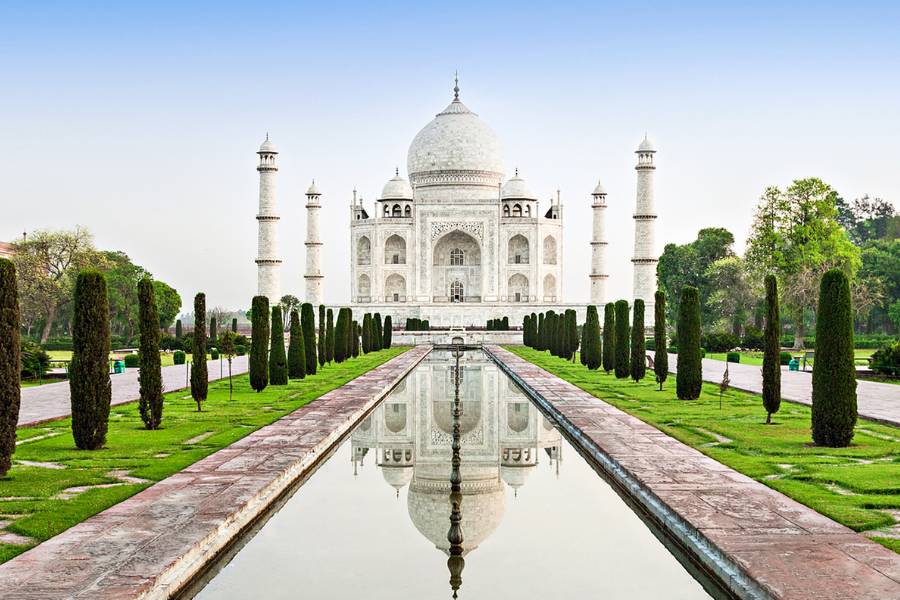
Once you arrive, the Taj Mahal should be your primary attraction. The monument is one of India's most famous landmarks and is best experienced without rushing. Allow several hours for the entire visit, including entry procedures, security checks, walking through the gardens, photography, and exploring the surrounding structures.
The appearance of the Taj Mahal changes with the light, which makes the timing of your visit an important part of the experience. Check the latest official visiting information before travelling because opening arrangements and visitor rules can change.
After the Taj Mahal, consider visiting Agra Fort. The enormous red sandstone complex provides insight into the Mughal imperial period and contains courtyards, halls, mosques, palaces, and defensive structures.
Agra Fort also offers perspectives toward the Taj Mahal from selected areas. If you are interested in history, architecture, or photography, give yourself enough time to explore rather than treating the fort as a quick stop.
Depending on your arrival time and energy levels, you can also consider other attractions in Agra. However, do not overload the day because you will eventually need to travel to Jaipur or prepare for the next day's journey.
Day 3 focuses on the journey from Agra to Jaipur. The drive can be made more interesting by stopping at Fatehpur Sikri, a historic Mughal city located west of Agra.
Fatehpur Sikri was developed during the reign of Emperor Akbar and contains impressive red sandstone structures, courtyards, religious buildings, and palaces. The complex provides a different architectural experience from the Taj Mahal, making it a worthwhile addition when your schedule allows.
After exploring Fatehpur Sikri, continue toward Jaipur. Keep your schedule flexible because the total travel time can vary according to traffic, road conditions, and the duration of your sightseeing stop.
Once you reach Jaipur, check into your hotel and use the evening for a relaxed introduction to the city. You might visit a local market, enjoy a Rajasthani dinner, or simply rest before the next day's sightseeing.
Jaipur's markets are particularly appealing if you enjoy shopping for traditional handicrafts, textiles, jewellery, decorative items, and souvenirs. Popular shopping areas include markets around the old city, although prices and product quality can vary considerably.
If shopping is not your priority, use the evening to enjoy local cuisine. Rajasthani food includes dishes with distinctive flavours and preparation methods, and many restaurants offer both vegetarian and non-vegetarian options.
Do not stay out too late if your next morning begins early. Jaipur has several major attractions, and the fourth day can become busy.
The final day of your 4-Day Golden Triangle Tour should focus on Jaipur's major attractions. Start early and visit Amber Fort before the day becomes too hot or crowded.
Amber Fort is located outside the central part of Jaipur and contains courtyards, gates, halls, palaces, and detailed decorative work. Give yourself sufficient time to explore the complex because rushing through it can make the visit feel incomplete.
After Amber Fort, you can continue toward other major attractions such as Jal Mahal, City Palace, Jantar Mantar, and Hawa Mahal. Because these locations are in different parts of the city, efficient route planning is important.
Hawa Mahal, or the Palace of Winds, is one of Jaipur's most recognisable structures. Its distinctive façade makes it a popular photography stop, and the surrounding streets provide access to several markets and shops.
The monument does not necessarily require the same amount of time as Amber Fort, so it can be combined with nearby sightseeing. If you enjoy architecture, take a moment to examine the façade rather than simply taking a quick photograph from across the street.
City Palace provides another perspective on Jaipur's royal heritage. The complex includes courtyards, buildings, decorative details, and museum collections.
Nearby Jantar Mantar is particularly interesting because it demonstrates historical astronomical instruments on a remarkable scale. Even travellers who are not normally interested in astronomy may find the site's combination of science, architecture, and history fascinating.
With limited time, check the current opening hours and ticket information before your visit.
Transportation can determine how smoothly your 4-Day Golden Triangle Tour runs. A private car is particularly convenient because you can travel directly between hotels and monuments without repeatedly arranging taxis.
When comparing car packages, do not look only at the advertised base price. Ask whether fuel, tolls, parking, driver charges, interstate taxes, and additional kilometres are included. Clarifying these details beforehand can prevent unexpected costs.
For couples or small groups, a comfortable sedan may be sufficient. Families or larger groups may prefer an SUV or larger vehicle with additional luggage space.
Hotel location matters when you only have four days. Staying close to major transport routes or sightseeing areas can reduce unnecessary travel.
In Delhi, choose a property that provides convenient access to your planned attractions and departure route toward Agra. In Agra, accommodation near the main sightseeing areas can make an early Taj Mahal visit easier. In Jaipur, staying within reasonable reach of the old city and major attractions can simplify your final sightseeing day.
Your hotel budget can vary significantly depending on room category, location, season, and facilities. Read recent reviews and check what is included in the room rate before booking.
Pack for walking and changing weather conditions. Comfortable footwear is essential because all three cities involve considerable sightseeing on foot.
Useful items include:
Avoid excessive luggage because moving between Delhi, Agra, and Jaipur becomes easier when your bags are manageable.
The cooler months are generally comfortable for extensive sightseeing, particularly when visiting large outdoor monuments. Winter mornings can be chilly, while afternoons may become pleasant.
Summer can be very hot, making early starts particularly valuable. If travelling during warmer months, plan major outdoor attractions earlier in the day and take breaks during the hottest period.
Monsoon conditions can bring rain and humidity. Check weather forecasts close to your departure and pack accordingly.
There is no single price for a four-day Golden Triangle trip because costs depend on your travel style. Your total budget can include hotels, private transportation, monument tickets, meals, shopping, guide services, and additional activities.
A useful approach is to separate your expenses into fixed and flexible categories. Hotels and transportation can often be booked in advance, while food, shopping, and optional activities can vary during the trip.
Always keep some extra money available for unexpected expenses. A delayed journey, additional taxi ride, upgraded meal, or spontaneous attraction can affect the final budget.
One of the most frequent mistakes is trying to visit too many attractions. Four days may sound generous until you calculate travel time between cities, hotel check-in, meals, and actual sightseeing.
Another mistake is ignoring traffic. Delhi and Jaipur can experience heavy traffic, and even short distances may take longer than expected. Add buffer time to important journeys, particularly when you have a flight or train to catch.
Travellers should also avoid choosing accommodation based solely on price. A hotel that saves money but requires long daily transfers can consume valuable sightseeing time.
Finally, do not forget to check official information for major monuments before travelling. Opening days, ticket rules, security requirements, and visitor procedures can change.
A successful 4-Day Golden Triangle Tour depends on realistic scheduling. Decide your priorities before the journey and build the route around them. Keep your first day focused on Delhi, dedicate the second day to Agra, use the third day for the Agra-to-Jaipur transfer and an optional Fatehpur Sikri visit, and reserve the fourth day for Jaipur.
Book your accommodation and transportation in advance, particularly during busy travel periods. Keep copies of important booking information on your phone and maintain access to emergency contacts.
Most importantly, allow yourself to enjoy the journey. The Golden Triangle is not simply a collection of monuments. The food, markets, streets, architecture, conversations, and changing landscapes between the cities are all part of the experience.
A four-day Golden Triangle itinerary can provide a rewarding introduction to Delhi, Agra, and Jaipur when planned carefully. The secret is to prioritise the most important attractions, start early, select convenient accommodation, and leave realistic time for transportation.
A well-organised 4-Day Golden Triangle Tour can include Delhi's historic landmarks, the Taj Mahal and Agra Fort, Fatehpur Sikri on the way toward Jaipur, and Jaipur's impressive forts, palaces, and markets. You will have busy days, but the contrast between the three cities makes the effort worthwhile.
If you have additional vacation time, extending the trip to five or six days can create a more relaxed experience. But if four days are all you have, sensible planning can still give you a memorable introduction to one of India's most popular travel circuits.
Yes. Four days are enough to see the principal highlights of Delhi, Agra, and Jaipur, although the itinerary will be relatively active. Travellers who prefer slower sightseeing may want five or more days.
Yes. Fatehpur Sikri can be included during the journey from Agra to Jaipur. Plan the stop in advance and allow enough time for sightseeing without making the day's schedule too tight.
Both options can work. A private car offers greater flexibility and makes it easier to stop at attractions such as Fatehpur Sikri, while trains can be efficient for selected city-to-city journeys.
Major attractions include Delhi's Red Fort, Qutub Minar, and Humayun's Tomb; Agra's Taj Mahal and Agra Fort; and Jaipur's Amber Fort, City Palace, Hawa Mahal, and Jantar Mantar.
The cooler months are generally more comfortable for outdoor sightseeing. However, the route can be travelled throughout the year with appropriate planning for seasonal weather conditions.


