
Planning a short trip to India and hoping to experience its history, culture, architecture, and vibrant city life? A Golden Triangle tour is one of the best ways to discover the country's most famous attractions in a limited amount of time. Connecting Delhi, Agra, and Jaipur, this classic travel route introduces you to magnificent Mughal monuments, impressive forts, colorful markets, traditional Indian cuisine, and the remarkable architectural heritage of northern India.
A 3-day Golden Triangle tour is an excellent choice for travelers who have limited vacation time but want to experience three iconic Indian destinations in one memorable journey. With the right itinerary, you can explore Delhi's historic landmarks, admire the world-famous Taj Mahal in Agra, and discover Jaipur's royal palaces and magnificent forts.
However, three days can pass quickly, especially when you need to travel between cities. The key to a successful trip is choosing suitable transportation, booking accommodation strategically, prioritizing the most important attractions, and allowing enough time for sightseeing without making every hour feel rushed.
In this guide, you will learn how to organize your itinerary, choose transportation, estimate your travel budget, select the best time to visit, and make the most of every day.
The Golden Triangle is a popular tourist circuit connecting three major northern Indian cities: Delhi, Agra, and Jaipur. These destinations form a roughly triangular route on the map, with each city offering a different perspective on India's history and cultural identity.
Delhi, the national capital, combines historic monuments, bustling bazaars, modern neighborhoods, and significant political landmarks. Agra is famous for the Taj Mahal and its Mughal heritage, while Jaipur, the capital of Rajasthan, is celebrated for its royal architecture, colorful markets, and traditional crafts.
The route is particularly appealing to first-time visitors because it provides a broad introduction to India without requiring extensive domestic travel. You can experience the contrast between Delhi's energetic streets, Agra's monumental architecture, and Jaipur's royal atmosphere within a relatively short journey.
Distances between the cities make the circuit practical for a road trip, although traffic and sightseeing stops can affect travel times. Delhi to Agra is approximately 230 kilometers by road, while Agra to Jaipur is roughly 240 kilometers, depending on the route. Jaipur to Delhi is around 270 to 300 kilometers by road, depending on your starting point and chosen route.
Because the schedule is compact, planning your travel times in advance is essential. A thoughtfully organized itinerary will help you spend more time exploring attractions and less time managing transportation.
A short Golden Triangle itinerary is ideal for travelers who want to experience India's major highlights without committing to a week-long holiday. It can fit into an international stopover, a business trip extension, a family vacation, or a short cultural getaway.
The biggest advantage is variety. In just three days, you can see historical landmarks from different periods, experience regional food traditions, explore traditional markets, and discover how architecture and culture differ between the three cities.
A private car tour offers considerable flexibility because you can arrange hotel pickups, travel directly between attractions, and adjust your sightseeing schedule where practical. Train travel is another option, particularly for selected routes, although station transfers and fixed departure times require additional planning.
The main challenge is time. You cannot explore every museum, monument, and neighborhood in each city during a three-day trip. Instead, focus on the attractions that interest you most and treat additional stops as optional.
For many visitors, the best strategy is to explore Delhi on the first day, travel to Agra for the Taj Mahal on the second day, and finish in Jaipur on the third day. If you want a more relaxed experience, consider adding another day rather than rushing through all three destinations.
Begin your journey in Delhi, a city where centuries of history coexist with modern infrastructure, lively markets, and contemporary restaurants. The capital offers numerous attractions, so it is sensible to choose a manageable combination of historical sites and cultural experiences rather than trying to see everything.
Start your sightseeing in Old Delhi, an area known for its historic streets, traditional markets, and Mughal-era landmarks. One of the most recognizable attractions is the Red Fort, a magnificent red sandstone complex associated with the Mughal Empire and India's later history.
Depending on opening hours and your schedule, you can explore the exterior and permitted visitor areas of the fort or prioritize another nearby attraction. Remember that major monuments may require security screening and separate admission tickets.
Continue toward Jama Masjid, one of India's best-known historic mosques. Visitors should dress respectfully and follow the site's current visitor rules. The surrounding streets provide a glimpse of traditional Delhi, with shops selling spices, textiles, snacks, and other local products.
If time allows, explore Chandni Chowk with a local guide or take a short walk through selected market lanes. This is an excellent opportunity to observe everyday life and sample local food from reputable establishments.
Old Delhi can be crowded, particularly during busy periods. Comfortable shoes, light luggage, and a flexible schedule will help you enjoy the experience.
After exploring Old Delhi, head toward New Delhi to discover the city's broad avenues, government buildings, and major landmarks. India Gate is a popular stop, particularly for visitors interested in national history and photography.
You can also explore the area around the Rashtrapati Bhavan and the principal government district from permitted public viewpoints. Access restrictions may apply to certain roads or buildings, so follow current local instructions.
If you prefer religious and cultural architecture, consider visiting Humayun's Tomb. This UNESCO World Heritage Site is admired for its Mughal garden design, impressive dome, and historical significance. Its architectural style also helps explain the development of later Mughal monuments, including the Taj Mahal.
Another possible stop is Qutub Minar, a remarkable medieval tower surrounded by historical structures. However, visiting both Humayun's Tomb and Qutub Minar may require careful time management, especially if you are also exploring Old Delhi.
Choose one or two major attractions based on your interests instead of spending the entire afternoon in traffic.
Finish your first day with a relaxed dinner at a reputable restaurant. Delhi offers everything from traditional North Indian dishes and street-food specialties to international cuisine and modern dining experiences.
Travelers interested in regional food might try chaat, kebabs, butter chicken, stuffed parathas, or vegetarian thalis. If you have dietary restrictions, ask about ingredients and preparation methods before ordering.
Spend the night in Delhi if your itinerary starts there. Choose accommodation with convenient access to your planned departure route for Agra the following morning.
Travel tip: Delhi has enough attractions to fill several days, so do not worry about seeing every landmark. Your goal is to enjoy a representative selection before continuing toward Agra.
The second day is devoted to Agra, a city renowned for its Mughal architecture and historical connections. An early departure from Delhi gives you the best opportunity to explore the Taj Mahal before continuing to Agra Fort and other optional attractions.
Leave Delhi early by private car or a suitable train service. A road journey commonly takes around three to four hours under favorable conditions, although traffic, weather, and your starting location can affect the actual travel time.
If you prefer train travel, compare available services and confirm the departure station, arrival station, timetable, and ticket availability before booking. Remember to account for transfers between railway stations and the monuments.
Once you arrive in Agra, head toward the Taj Mahal. Buying tickets in advance through official channels can help simplify your visit, but always confirm the current admission arrangements and opening schedule.
The Taj Mahal is generally open from sunrise to sunset every day except Friday, when it is closed to ordinary tourist visits for congregational prayers. Verify the operating schedule for your travel date.
The Taj Mahal is the centerpiece of most Golden Triangle itineraries. Commissioned by Mughal emperor Shah Jahan in memory of his wife Mumtaz Mahal, this white marble mausoleum is famous for its symmetrical design, decorative stone inlay, formal gardens, and monumental dome.
Allow approximately two to three hours for your visit, depending on crowds and how much time you want to spend photographing the monument. Walk through the gardens, admire the detailed marble work, and appreciate the balance between the central mausoleum and its surrounding structures.
A professional guide can explain the monument's history, architectural features, and cultural significance. If you prefer independent sightseeing, information boards and reliable travel resources can also help you understand the site.
Follow the posted rules regarding photography, footwear, security checks, and restricted areas. Carry only essential belongings and avoid touching or damaging protected surfaces.
For many travelers, seeing the Taj Mahal in person is the emotional highlight of the entire journey.
After the Taj Mahal, continue to Agra Fort, an important Mughal fortress and former imperial residence. Its red sandstone walls enclose courtyards, royal buildings, audience halls, and architectural spaces associated with several Mughal rulers.
The fort provides a different perspective on Mughal history. While the Taj Mahal is best known as an imperial mausoleum, Agra Fort reflects the political power, residential life, and administrative traditions of the dynasty.
Allow approximately one to two hours for sightseeing. If time permits, explore permitted viewpoints offering views toward the Taj Mahal.
Admission is generally separate from Taj Mahal entry, so confirm ticket costs before your visit. A guide can also help you understand the relationships between the fort, the Mughal emperors, and the development of Agra as an imperial center.
If you have extra time, consider visiting Itimad-ud-Daulah, often called the Baby Taj. However, this stop is optional and should not interfere with your onward journey.
After sightseeing, continue toward Jaipur, the capital of Rajasthan. The road journey from Agra typically takes around four to five hours, depending on traffic, route conditions, and stops.
This is a long day, so arrange your transportation in advance and carry water and light refreshments. If you are traveling with children or older family members, allow time for breaks.
Arrive in Jaipur in the evening, check into your hotel, and enjoy dinner at a nearby restaurant. You can explore a local market if you arrive early enough, but a restful evening may be the better choice after a full day of sightseeing.
Travel tip: Day two is the busiest part of the itinerary. If you want a more relaxed pace, consider spending the night in Agra and extending your trip by one day.
Jaipur, popularly known as the Pink City, is famous for its royal palaces, historic forts, traditional handicrafts, and distinctive architectural style. The third day offers an opportunity to explore Rajasthan's royal heritage before returning to Delhi or continuing your travels.
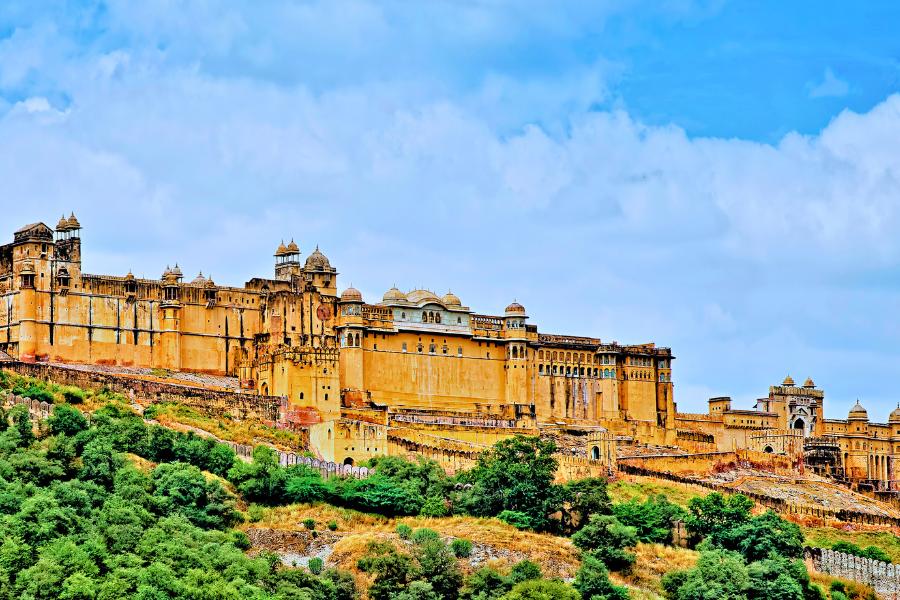
Begin with Amber Fort, one of Jaipur's most famous attractions. Located on a hillside outside the central city, the fort is known for its impressive courtyards, decorative halls, gateways, and views of the surrounding landscape.
The complex combines elements of Rajput and Mughal architectural traditions. Inside, you can explore the palace areas open to visitors and learn about the rulers who used the fort as a royal residence and defensive stronghold.
Allow approximately two hours for a comfortable visit, depending on crowds and your interest in the architecture. The climb, walking distances, and seasonal heat should be considered when planning your visit.
Choose comfortable shoes and carry water. If mobility is a concern, check current accessibility information before booking.
Return toward central Jaipur to see Hawa Mahal, one of the city's most recognizable landmarks. Its distinctive facade features numerous small windows designed to allow royal women to observe street life while maintaining privacy.
The building is an excellent example of Jaipur's architectural identity and is a popular photography stop. Depending on your schedule, you can admire the exterior or purchase admission to explore the visitor areas.
Nearby streets contain shops selling textiles, jewelry, handicrafts, and traditional Rajasthani products. If shopping is part of your plan, establish a time limit to protect the remainder of your itinerary.
If your schedule permits, continue to City Palace, a historic royal complex that reflects Jaipur's cultural and political history. Depending on the ticket selected and current access arrangements, visitors may explore courtyards, museum displays, and palace interiors.
Another worthwhile attraction is Jantar Mantar, an astronomical observatory recognized as a UNESCO World Heritage Site. Its monumental instruments were designed to observe celestial movements and demonstrate the sophisticated astronomical knowledge available in eighteenth-century India.
These attractions are close enough to form a practical central Jaipur sightseeing route, although walking time, queues, and traffic should still be considered.
If you have limited time, choose the attraction that interests you most rather than attempting to rush through both.
The final stage depends on your onward travel arrangements. Jaipur is approximately 270 to 300 kilometers from Delhi by road, and the journey can take around five to six hours or longer depending on traffic and stops.
Returning to Delhi on the third evening is possible, but it creates another long travel day after a full schedule of sightseeing. If you have an international flight, avoid arranging a tight connection immediately after the road journey.
For a more comfortable experience, spend the third night in Jaipur and return to Delhi the following day. This allows additional time for shopping, local food, or attractions you could not visit earlier.
A carefully planned itinerary should balance sightseeing with rest rather than simply maximizing the number of places visited.
Choosing the right transportation can make a significant difference to your experience. Your decision should reflect your budget, group size, preferred travel style, and tolerance for long journeys.
TransportationAdvantagesConsiderationsPrivate car with driverFlexible schedule, direct transfers, convenient for groupsHigher overall vehicle costTrainComfortable on selected routes, avoids road trafficFixed timetable and station transfersBusMay be economical on selected routesLess flexibility and longer transfersOrganized tourSimplified logistics and optional guide servicesItinerary and inclusions varySelf-drive rentalGreater independenceNavigation, traffic, parking, and driving conditions
For many first-time visitors, a private car with a driver is convenient because the route involves several cities and multiple sightseeing stops. Train travel can be effective when services align with your schedule, but it requires more coordination.
If you choose a package, request a written itinerary and confirm which transportation costs, monument tickets, meals, guide fees, and hotel stays are included.
The total cost varies according to your accommodation standard, vehicle type, group size, meal preferences, and selected attractions. The figures below are illustrative planning ranges rather than live quotations.
Expense categoryBudget estimate per personAccommodation for two nights₹2,000–₹10,000+Intercity transportation₹2,000–₹8,000+Meals and refreshments₹1,500–₹4,000Monument admissionsVaries by site and visitor categoryLocal guide servicesDepends on city, language, and durationShopping and personal expensesDepends on individual preferences
These estimates should not be treated as a guaranteed package price. Private luxury vehicles, premium hotels, specialist guides, and customized itineraries can increase the overall budget.
Traveling with family or friends may reduce the per-person cost of private transportation when the vehicle expense is shared. Budget travelers can save money by selecting modest accommodation, using suitable train services, and prioritizing the most important attractions.
Before confirming a package, ask for a detailed breakdown of included and excluded services. This makes it easier to compare offers fairly and avoid unexpected expenses during the trip.
The cooler months from October through March are generally popular for visiting Delhi, Agra, and Jaipur. Temperatures are often more comfortable for walking and exploring outdoor monuments, although winter mornings can bring fog that affects visibility and transport schedules.
April through June can be extremely hot, particularly in Agra and Jaipur. If you travel during summer, begin sightseeing early, carry water, wear sun protection, and schedule breaks during the hottest part of the day.
The monsoon season, usually from July through September, can bring rain and humidity. The landscape may appear greener, but wet weather can affect walking conditions and travel times.
Whenever you plan to visit, check monument opening hours, public holidays, local weather forecasts, and transport schedules. Advance reservations are particularly helpful during busy travel periods.
A successful 3-day Golden Triangle tour depends on realistic planning. The route is manageable, but traveling between three major cities while visiting multiple monuments requires careful coordination.
Book your accommodation and intercity transportation in advance, particularly if you are traveling during the main tourist season. Keep copies of your reservations and confirm pickup times with your driver or tour operator before departure.
Pack comfortable walking shoes, lightweight clothing appropriate to the season, sunscreen, identification, and any necessary medication. Carry some cash for small purchases while keeping payment cards and important documents secure.
Prioritize the Taj Mahal, Agra Fort, and Jaipur's principal landmarks instead of trying to visit every attraction. If you are traveling with children, older relatives, or people with mobility needs, allow extra time and choose fewer stops.
Finally, confirm all package inclusions in writing. A clear understanding of transportation, hotel accommodation, monument tickets, guide services, meals, and cancellation policies will help you avoid confusion.
A well-organized 3-day Golden Triangle tour is an exciting introduction to India's history, architecture, and cultural diversity. By exploring Delhi's historic landmarks, experiencing the Taj Mahal in Agra, and discovering Jaipur's royal heritage, you can enjoy three distinctive destinations within a short holiday.
The key is to plan your route carefully, begin each day early, and avoid packing too many attractions into the schedule. Private car travel offers flexibility, while trains can be a practical alternative when departure times suit your plans. Choosing the right transportation and accommodation will help you make the most of your time.
If you prefer a relaxed pace, extending the itinerary by one or two days is worthwhile. However, with realistic expectations and advance preparation, three days can provide a rewarding overview of northern India's most celebrated tourist circuit.
Yes. You can visit Delhi, Agra, and Jaipur in three days if you prioritize the major attractions and organize transportation in advance. The schedule is busy, so adding an extra day is recommended if you prefer a slower pace.
A practical route is Delhi to Agra, followed by Jaipur, with the return to Delhi either on the third evening or the following day. This route allows you to explore Delhi first, visit the Taj Mahal and Agra Fort, and finish with Jaipur's major forts and palaces.
A private car offers flexibility, direct transfers, and convenient travel between attractions. Trains can be more economical or faster on selected routes, but station transfers and fixed schedules require planning. The best option depends on your budget, group size, and itinerary.
The cost depends on hotels, transportation, meals, guide services, and monument admission. Budget-conscious travelers can reduce expenses by using trains and modest accommodation, while private luxury tours cost more. Always request a detailed quotation before booking.
Pack comfortable walking shoes, season-appropriate clothing, sunscreen, a hat, identification, medication, and a refillable water bottle where permitted. Keep your travel documents and booking confirmations accessible, and carry only essential belongings when visiting major monuments.


