
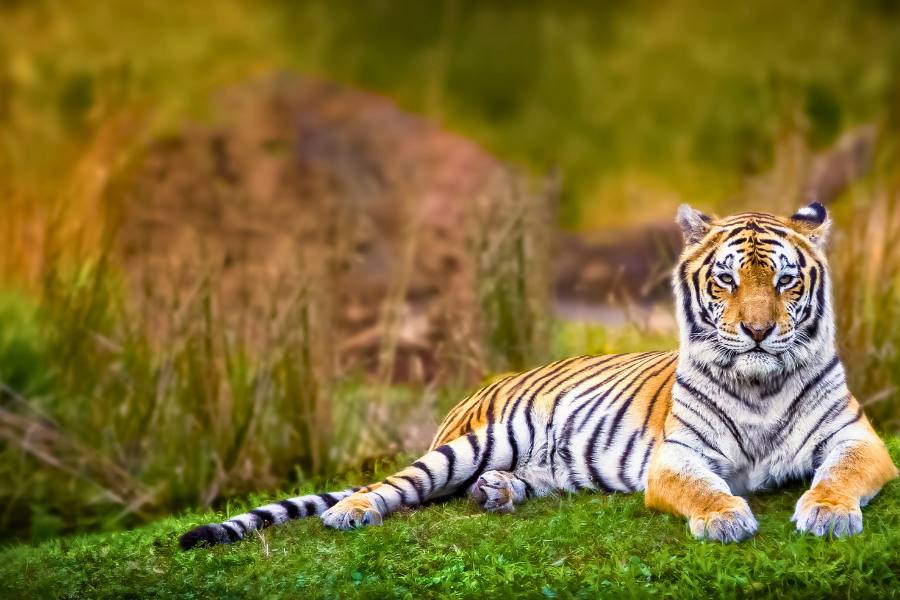
Combining Delhi, Agra, Jaipur, and Ranthambore is one of the most rewarding ways to experience northern India because it brings together monumental architecture, royal heritage, colorful culture, and wildlife in one well-connected journey. The classic Golden Triangle already gives travelers three very different cities: Delhi introduces India's historic and modern contrasts, Agra showcases the magnificent Taj Mahal, and Jaipur adds grand forts, palaces, bazaars, and the unmistakable character of Rajasthan. Adding Ranthambore changes the rhythm of the trip completely. Instead of moving only between cities and monuments, you get to enter a dry-deciduous wilderness where Bengal tigers, leopards, sloth bears, deer, crocodiles, and numerous birds live in their natural habitat. Rajasthan Tourism describes Ranthambore as a major wildlife destination and notes that the reserve is located around 14 kilometers from Sawai Madhopur.
The smartest way to plan a Golden Triangle with Ranthambore itinerary is to place the wildlife destination between Agra and Jaipur or immediately after Jaipur, depending on your transportation and sightseeing priorities. A well-planned route can usually be completed in seven to eight days, although travelers who want multiple safaris should consider eight to ten days. The journey does not have to feel rushed if you organize your nights around the attractions rather than trying to see everything in a single day. Think of the trip as a story: Delhi provides the introduction, Agra delivers the iconic centerpiece, Ranthambore adds adventure, and Jaipur finishes the experience with royal architecture and vibrant Rajasthani culture.
The biggest advantage of adding Ranthambore is variety. A standard Golden Triangle journey is rich in history and architecture, but several days of forts, tombs, palaces, temples, and museums can feel very different from spending a morning quietly watching the forest for signs of a tiger. Ranthambore gives you that contrast without requiring a completely separate wildlife vacation. The reserve is known for its dry-deciduous landscape, lakes, grasslands, rocky terrain, and diverse wildlife, with the historic Ranthambore Fort dramatically overlooking the landscape.
This combination is particularly attractive for first-time visitors to India. You can photograph the Taj Mahal at sunrise, walk through the enormous courtyards of Agra Fort, explore Jaipur's Amber Fort and City Palace, and then climb aboard a safari vehicle in search of wildlife. Each destination feels different, so the trip keeps changing pace. It is almost like reading four different chapters of the same book: Mughal history, wilderness, Rajput heritage, and modern Indian city life.
For most international travelers, the most practical sequence is Delhi → Agra → Ranthambore → Jaipur → Delhi. This route works well because Agra connects naturally with the Sawai Madhopur area, while Ranthambore is also reasonably convenient for continuing onward to Jaipur. Rajasthan Tourism's suggested itinerary specifically includes Agra to Ranthambore via Bharatpur, followed by Ranthambore to Jaipur, showing how naturally the wildlife destination can be incorporated into a broader Rajasthan journey.
An alternative is Delhi → Agra → Jaipur → Ranthambore → Delhi, which can work if your priorities are more focused on Jaipur before the safari. However, this arrangement can create additional road travel depending on your final departure plans. For travelers who want a smooth sightseeing flow, placing Ranthambore between Agra and Jaipur is usually the more logical choice. It also allows you to finish the trip in Jaipur, where there are many accommodation, shopping, dining, and transport choices.
A realistic Golden Triangle with Ranthambore trip takes around seven to eight days for a first-time traveler. A shorter six-day version is possible, but it requires tighter scheduling and leaves less room for unexpected delays. If wildlife is a major reason for adding Ranthambore, spending only one night there may not be ideal because you could end up with limited safari opportunities. Two nights provide a much better balance and give you the possibility of taking more than one game drive.
A comfortable eight-day plan could look like this:
DayDestinationMain ExperienceDay 1DelhiArrival and sightseeingDay 2DelhiOld Delhi and New DelhiDay 3Delhi–AgraTaj Mahal and Agra FortDay 4Agra–RanthamboreFatehpur Sikri/Bharatpur option and transferDay 5RanthamboreWildlife safarisDay 6Ranthambore–JaipurTransfer and Jaipur sightseeingDay 7JaipurAmber Fort and Pink CityDay 8Jaipur–DelhiDeparture or onward travel
This structure gives you enough breathing room to enjoy the major attractions rather than treating every destination like a checklist.
Delhi works best as the starting point because it gives travelers a broad introduction to India's history and contemporary culture. Depending on your arrival time, you can explore landmarks such as India Gate, Humayun's Tomb, Qutub Minar, Jama Masjid, and the busy streets of Old Delhi. Rather than trying to visit every attraction, select a few that match your interests and leave time to experience the city itself.
For travelers arriving from overseas, spending two nights in Delhi is particularly useful. International flights can be tiring, and having a relaxed first day makes the remainder of the trip easier. Delhi also provides excellent rail and road connections toward Agra, making it a natural starting point for the itinerary.
Agra is the emotional centerpiece of the journey for many visitors. The Taj Mahal is the obvious highlight, but it should not be treated as the city's only attraction. Agra Fort, Mehtab Bagh, and the city's traditional marble and handicraft workshops can add considerable depth to your visit. If your schedule allows, an early morning visit to the Taj Mahal followed by breakfast and Agra Fort creates an efficient sightseeing day.
The Taj Mahal is closed on Fridays, so travelers should check the calendar before finalizing their itinerary. This is particularly important when arranging a multi-city journey because changing the Agra day later can affect hotel reservations, transport, and safari bookings. A little planning here can prevent a surprisingly complicated domino effect later in the trip.
The journey from Agra toward Ranthambore is where the trip begins to change character. Instead of moving deeper into a major urban center, you gradually transition toward the landscapes around Sawai Madhopur. Rajasthan Tourism's suggested itinerary includes traveling from Agra toward Ranthambore via Bharatpur and identifies Sawai Madhopur as the nearest railway station for the park.
You can travel by private car, train combinations, or a professionally organized tour depending on your budget and preferred pace. A private vehicle is particularly convenient for travelers who want to stop at attractions along the route or avoid coordinating multiple transfers. If you are using trains, check the current schedule before building your itinerary because connections and operating times can change.
Ranthambore is not simply a place where visitors arrive and immediately see a tiger. It is a genuine wildlife environment, and that uncertainty is part of the experience. Rajasthan Tourism lists tigers alongside leopards, sloth bears, caracals, jackals, foxes, hyenas, mongoose, chital, sambar, nilgai, langurs, crocodiles, and many bird species.
A safari is therefore valuable even when a tiger does not appear. You may spend part of the morning following alarm calls, watching deer near a water source, photographing birds, or moving through dramatic rocky landscapes. Experienced guides and naturalists can help explain animal behavior and interpret tracks, calls, movement, and habitat. That makes the experience much more meaningful than simply driving around hoping for a photograph.
If wildlife is important to you, aim for at least two safaris. One morning and one afternoon game drive provide different opportunities because animal activity, light, temperature, and visibility change throughout the day. Rajasthan Tourism's suggested itinerary recommends early morning and early evening game drives, describing these periods as times when temperatures are cooler and animals can be more active.
Three or four safaris are even better for serious wildlife enthusiasts. Multiple drives increase the number of hours you spend inside the reserve and allow you to experience different zones and conditions. There is never a guarantee of a tiger sighting, so the best mindset is to appreciate the entire ecosystem rather than measuring success only by whether you get a tiger photograph.
Safari permits should be arranged early, especially during busy travel periods. The Rajasthan Forest Department currently provides an online booking and permit service for Ranthambore Tiger Reserve.
The official booking system also explains that visitors can select Ranthambore National Park–Sawai Madhopur and provides availability information for safari permits. It states that a gypsy booking can accommodate up to six members, while a canter can accommodate up to 20 members.
When planning your trip, do not build the entire itinerary around an assumed safari time until your permit is confirmed. Safari schedules and availability can change, and seasonal operating conditions may affect access. Always verify the latest information through the official Rajasthan Forest Department system before paying for travel arrangements.
After your wildlife experience, Jaipur provides a natural transition back into Rajasthan's architectural and cultural world. Rajasthan Tourism's suggested itinerary lists Ranthambore to Jaipur as approximately 180 kilometers and around three hours by road, although actual travel time can vary with traffic, road conditions, and stops.
Arriving in Jaipur after a morning safari can work well if you are comfortable with a relatively active day. Otherwise, spend another night in Ranthambore and travel to Jaipur the following morning. This is especially sensible for families, older travelers, photographers, or anyone who has taken an early safari and wants a slower afternoon.
Jaipur deserves at least two nights if you want to experience more than its most famous monuments. Amber Fort, City Palace, Jantar Mantar, Hawa Mahal, and the old Pink City are among the principal attractions. You can also explore traditional markets, jewelry shops, textiles, handicrafts, and local restaurants.
A good Jaipur day should not feel like a race between monuments. Start with Amber Fort when temperatures are comfortable, continue toward the central city, and leave the late afternoon for markets or relaxed exploration. Jaipur is one of those destinations where the atmosphere between the attractions can be just as memorable as the attractions themselves.
The best period for this itinerary depends on your priorities. For travelers who want pleasant sightseeing conditions across Delhi, Agra, and Jaipur while also enjoying wildlife, the cooler months from approximately October through March are generally attractive. However, Ranthambore's official tourism information indicates that the park's main visitor season extends from October through June.
If tiger sightings are your primary objective, seasonality should be discussed with a knowledgeable local operator before booking because vegetation, heat, water availability, and animal behavior can influence what you experience. If comfort and pleasant sightseeing are more important, the cooler months may provide a better overall balance.
Both approaches can work, but a private tour is often easier for this particular itinerary. You are combining several cities with different transportation requirements and adding a wildlife permit that needs advance coordination. A private driver can simplify the road journeys, while a tour operator can coordinate hotels, guides, safari permits, and sightseeing.
Independent travel can be rewarding for experienced travelers who enjoy arranging trains, hotels, guides, and permits themselves. The trade-off is that you have to manage each connection personally. For a first trip to India, the convenience of having the logistics coordinated can be worth the additional cost.
The total cost depends heavily on hotel category, transport, number of safari drives, guide services, and travel season. Budget travelers can use standard hotels and public transport, while luxury travelers can choose high-end heritage properties, private vehicles, premium guides, and luxury wildlife lodges.
Safari fees should always be checked before booking because government charges can change. The Rajasthan Forest Department is the most reliable source for current permit and booking information.
A practical budget structure is to divide your spending into four categories: accommodation, intercity transportation, sightseeing and guides, and safari experiences. This makes it easier to compare packages from different operators without being distracted by a single headline price.
The most important rule is to avoid overloading the itinerary. India rewards travelers who leave some space for delays, spontaneous discoveries, relaxed meals, and simply watching daily life unfold. Keep your important sightseeing and safari bookings fixed, but allow flexibility around them.
Book Ranthambore safaris before finalizing non-refundable travel arrangements. Check the Taj Mahal's weekly closure when choosing your Agra date. Keep copies of your hotel and safari confirmations, and carry suitable clothing for both city sightseeing and early-morning wildlife drives. Most importantly, treat wildlife sightings as a bonus rather than a guarantee.
Absolutely. The real strength of this journey is its diversity. You can begin among Delhi's historic monuments, stand before the Taj Mahal in Agra, watch the landscape change on the way to Sawai Madhopur, search for wildlife in Ranthambore, and then finish among Jaipur's forts and palaces.
A Golden Triangle with Ranthambore itinerary is especially worthwhile for couples, families, photographers, first-time India visitors, and travelers who want more than a conventional sightseeing holiday. The addition of Ranthambore gives the journey a sense of adventure without requiring you to abandon the classic highlights of northern India. Instead of choosing between culture and wildlife, you get both in one carefully designed route.
Combining Delhi, Agra, Jaipur, and Ranthambore creates one of the most balanced northern India itineraries for travelers who want history, architecture, culture, and wildlife. The ideal route is generally Delhi to Agra, onward to Ranthambore, and then Jaipur, although the exact order can be adjusted around flights, trains, safari availability, and personal interests. Allowing seven to eight days provides a comfortable foundation, while eight to ten days is better if wildlife is a major priority.
The secret is not simply adding another destination to the map. It is giving each place enough time to make an impression. Spend meaningful time with the monuments, schedule multiple safari opportunities when possible, and leave room for the unexpected moments that make travel memorable. With current safari permits, transportation, hotels, and sightseeing arranged in the right order, this itinerary can become far more than a checklist—it can become a complete introduction to India's history, royal heritage, and wild landscapes.
Seven to eight days is a good starting point for most travelers. If you want three or more safaris or a slower pace, consider eight to ten days.
A highly practical route is Delhi → Agra → Ranthambore → Jaipur → Delhi. It creates a logical flow between the major destinations and avoids unnecessary backtracking.
Yes, Ranthambore is well known for wild tiger sightings, but no safari can guarantee one. The reserve also supports many other mammals and bird species, making the experience worthwhile even without a tiger encounter.
Yes. Advance booking is strongly recommended because safari permits are limited and demand can be high. The Rajasthan Forest Department provides the official online permit and booking system.
Yes. Families who enjoy animals, nature, history, and adventure can find the combination particularly rewarding. Choose comfortable hotels, avoid overly aggressive schedules, and plan safari times around the ages and energy levels of children.


