
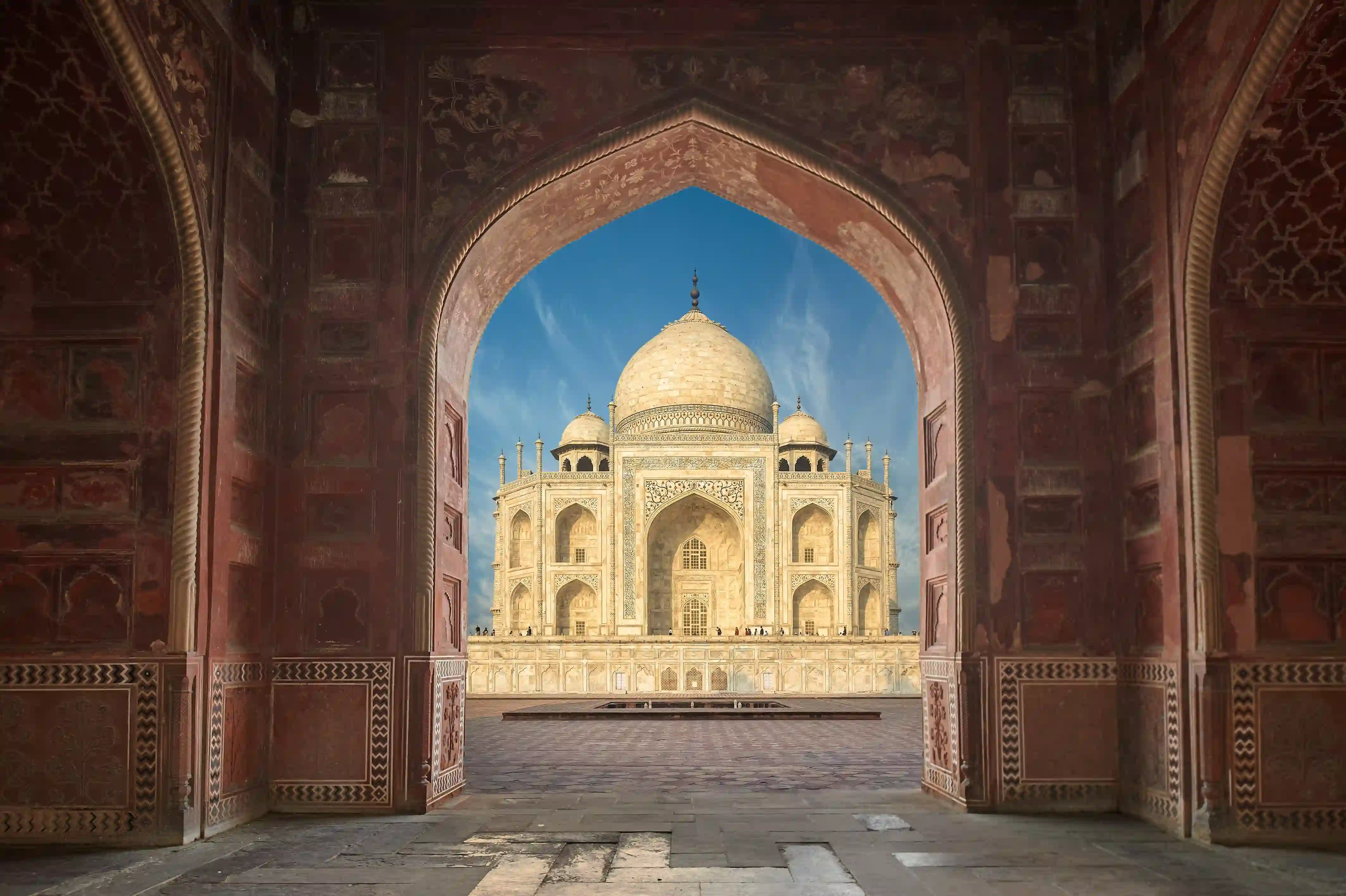
Yes, you can visit the Taj Mahal and return to Delhi on the same day. In fact, a same-day Agra trip is one of the most convenient options for travelers who have limited time in India and do not want to change hotels. Delhi and Agra are connected by highways and railway services, making it possible to leave early in the morning, spend several hours exploring the Taj Mahal, visit another important attraction such as Agra Fort, enjoy lunch, and return to Delhi in the evening.
The key to making the trip enjoyable is starting early and planning your transportation carefully. A late departure can turn an exciting sightseeing trip into a rushed schedule, particularly if you want to visit more than one attraction. For most travelers, leaving Delhi around 5:00 or 6:00 a.m. is a sensible approach. Depending on your chosen transportation and current schedules, you can reach Agra during the morning and have several hours available for sightseeing.
A Taj Mahal day trip from Delhi does require a fairly long travel day, but it does not have to be uncomfortable. If you use a fast train, the journey can be significantly quicker than traveling by road. A private car gives you more flexibility, while an organized tour takes care of much of the logistics. The best option depends on your budget, group size, comfort level, and how much freedom you want during the day.
Absolutely. Thousands of travelers plan Agra as a day trip while staying in Delhi. The distance between the two cities is manageable for a single-day journey, especially with modern transport connections.
The most important thing to understand is that you are not simply traveling from one tourist attraction to another. Your actual journey includes getting from your Delhi hotel to a railway station or pickup point, traveling to Agra, reaching the Taj Mahal after arriving, completing security and entry procedures, sightseeing, traveling to additional attractions, and then returning to your departure point.
That sounds like a lot, but it becomes much easier when you organize the day around the Taj Mahal. Make the monument your first major stop rather than trying to squeeze in several activities before it.
If you are visiting Agra for the first time, the Taj Mahal and Agra Fort are usually enough for a satisfying day. Trying to visit every historical site in the city can make the itinerary unnecessarily stressful.
For a comfortable day trip, 5:00 to 6:00 a.m. is generally a good departure window. Your exact time should depend on whether you are traveling by train, private car, bus, or an organized tour.
An early start gives you several advantages. First, you maximize your sightseeing time. Second, you create a buffer in case of traffic, delays, queues, or unexpected problems. Third, you can complete the most important attraction before the hottest part of the day during warmer months.
If you leave Delhi much later, you may still be able to visit the Taj Mahal, but your schedule becomes tighter. A departure around 8:00 or 9:00 a.m. can work for travelers who only want to see the Taj Mahal and return, but it is less suitable if you also want to explore Agra Fort.
Think of your early start as buying yourself extra time. You may not need every minute, but if something goes wrong, you will be glad you have that extra space in your itinerary.
The journey time varies according to your transportation method and starting location. By road, the distance is roughly 200 kilometers, and a private car can take several hours depending on traffic and road conditions.
Train travel can be faster, with some services connecting Delhi and Agra in approximately two hours or less. However, not every train has the same journey time, so travelers should check the current timetable when making their plans.
There is another factor that first-time visitors sometimes overlook: Delhi itself is huge. Getting from your hotel to the railway station can take significant time. If your train leaves early, you also need enough time to reach the station, locate your platform, and board.
For this reason, calculate your journey from your hotel rather than simply thinking about the published Delhi-to-Agra travel time.
For many visitors, the train is one of the best options for a same-day journey. It can save time and eliminate some of the uncertainty associated with road traffic.
Fast services can get you to Agra in the morning, giving you plenty of time to visit the Taj Mahal and other attractions. Train travel can also be more comfortable than spending several hours sitting in a car.
However, you need to plan the last part of the journey. Once you arrive in Agra, you still need transportation from the railway station to the Taj Mahal. Auto-rickshaws, taxis, app-based transportation, and other local options may be available depending on current services.
Always check the current train schedule and ticket availability before your trip. Timetables and operating arrangements can change, and an itinerary built around an outdated schedule can quickly fall apart.
A private car is another excellent choice, particularly for families or small groups. The major advantage is flexibility. Your vehicle can pick you up directly from your Delhi hotel, take you to Agra, wait while you explore, and bring you back.
You can also adjust the itinerary. If you spend longer at the Taj Mahal than expected, you do not have to worry about missing a train immediately afterward.
The downside is cost. A private vehicle generally costs more than public transportation, particularly for solo travelers. For a group of several people, however, the cost can be divided among the passengers.
If you choose a private car, confirm what is included in the price. Ask whether fuel, tolls, parking, driver charges, and waiting time are included. A clear agreement beforehand can prevent misunderstandings later.
Buses can also connect Delhi and Agra and may appeal to travelers looking for an economical option. However, the overall experience depends on the service you select.
The biggest concern for a same-day trip is journey time. A cheaper bus is not necessarily the best option if it takes significantly longer than a train and reduces your sightseeing window.
Before booking, check the current departure location, arrival point, travel duration, and return schedule. Delhi has multiple transport hubs, and the most convenient departure point depends on where you are staying.
For travelers on a strict budget, buses can be worth considering. For travelers who want to maximize sightseeing time, a fast train may provide better value even if the ticket costs more.
The Taj Mahal should obviously be your first priority. It is the monument that brings most visitors to Agra, and it deserves enough time for you to appreciate the architecture rather than simply rushing through the entrance and leaving.
After the Taj Mahal, Agra Fort is the most obvious second attraction. The enormous red sandstone complex provides an entirely different experience and gives visitors more insight into Mughal history.
If your schedule allows, you can consider other attractions such as Mehtab Bagh or additional historical sites. However, optional attractions should remain secondary.
A common mistake is creating a list of five or six places because they all look close together on a map. In reality, every attraction involves transportation, security, walking, entry procedures, and time. Two well-planned attractions can be much more enjoyable than six rushed ones.
Most visitors should allow around two to three hours for the Taj Mahal, although the ideal amount depends on personal interests.
Photography enthusiasts may want longer because the monument looks different from various locations within the complex. Travelers interested in architecture and history may also enjoy spending additional time examining the marble details, gardens, gateway, and surrounding structures.
You should also allow time for security procedures and walking between different parts of the complex.
The Taj Mahal is one of those places where rushing can diminish the experience. You have traveled several hours to reach it, so give yourself enough time to actually enjoy being there.
Yes, Agra Fort fits very naturally into a same-day itinerary. Because it is relatively close to the Taj Mahal, combining the two attractions is practical.
A typical schedule might involve visiting the Taj Mahal in the morning, having lunch, and then exploring Agra Fort in the afternoon. Depending on your departure time, you may have an opportunity to see one additional attraction, but do not make your return journey dependent on it.
If you begin running late, Agra Fort is easier to shorten or skip than the Taj Mahal. Your return transportation should always take priority over an optional sightseeing stop.
A practical itinerary could look like this:
5:00–6:00 a.m. — Leave Delhi
Start from your hotel by train, private car, or another pre-arranged form of transportation.
Morning — Arrive in Agra
Travel directly toward the Taj Mahal rather than spending too much time at the station.
Morning to early afternoon — Taj Mahal
Spend approximately two to three hours exploring the monument and surrounding areas.
Early afternoon — Lunch
Have lunch at a clean restaurant in Agra.
Afternoon — Agra Fort
Spend approximately one to two hours exploring the fort.
Late afternoon — Begin return journey
Head toward your train station or meet your driver.
Evening — Return to Delhi
Arrive back in Delhi and continue with your itinerary or return to your hotel.
The exact times will depend on current transportation schedules, attraction opening hours, traffic, and your preferred pace.
That depends on the traveler. You will probably have an early start and several hours of transportation combined with considerable walking, so this is not the most relaxing travel day you can design.
For young travelers, couples, families with older children, and people comfortable with long days, it can be perfectly manageable.
Older travelers or people with mobility concerns may prefer a private car because it provides greater flexibility and reduces some of the stress associated with changing transportation.
The best strategy is to avoid packing too much into the day. A relaxed visit to two major attractions is much better than spending the entire afternoon worrying about whether you will catch your return train.
The cooler months are generally more comfortable for sightseeing in northern India. During winter, daytime conditions can be pleasant, although morning fog can occasionally affect visibility and transportation.
During the hotter months, an early start becomes even more important. You can complete much of your outdoor sightseeing before temperatures become uncomfortable.
The monsoon season can bring rain and humidity. The Taj Mahal can still be beautiful under cloudy skies, but you should allow extra flexibility for weather-related travel disruptions.
Regardless of the season, wear comfortable footwear. The amount of walking involved in a day trip is easy to underestimate.
Keep your day-trip luggage light. A small bag is much easier to manage than a large backpack, especially when traveling by train and passing through security.
Useful items include comfortable shoes, sunscreen, sunglasses, necessary medication, a phone charger or power bank, identification, and some water where permitted.
Check the current Taj Mahal security rules before your visit. Certain items may not be permitted inside the complex, and restrictions can change over time.
Keeping your belongings simple also makes security checks faster and reduces the risk of losing something during a busy sightseeing day.
The simplest way to save time is to make the Taj Mahal your first priority. Do not begin the day with unnecessary shopping or lengthy meals.
Book transportation ahead of time when possible. If traveling by train, know exactly how you will reach the station from your Delhi hotel and how you will get from the Agra station to the monument.
If using a private car, arrange the pickup and return details before departure. Clear communication with the driver is particularly important if the vehicle will wait while you explore.
You should also check the current ticketing arrangements for the Taj Mahal before leaving Delhi. Knowing where and how to obtain your ticket can prevent unnecessary confusion when you arrive.
An organized day tour can be useful if you do not want to manage transportation and sightseeing independently. Many tours combine Delhi pickup, transportation to Agra, Taj Mahal entry, a guide, and a return journey.
The downside is that tours can be more expensive than arranging the trip yourself. They may also follow a fixed schedule, which means you have less flexibility.
Independent travel is often better for people who want to control their budget and pace. A tour is more attractive if convenience is your highest priority.
Before booking a package, read exactly what is included. Check whether entrance tickets, meals, guide services, parking, taxes, and return transportation are part of the advertised price.
This is one of the most important parts of planning a same-day trip. Never schedule your return transportation immediately after your final sightseeing activity.
Traffic, queues, unexpected delays, and longer visits can all affect your schedule. Give yourself a generous buffer between leaving Agra's attractions and your actual departure from the city.
If you are traveling by private car, agree on a realistic return time with your driver. If you have a fixed train ticket, work backward from the departure time and decide when you need to leave the Taj Mahal area.
Your return journey should be treated as a fixed deadline. Optional sightseeing should fit around it, not the other way around.
One of the most common mistakes is leaving Delhi too late. A 9:00 or 10:00 a.m. departure may sound reasonable when you are planning the trip, but it can leave you with very little time once transportation and sightseeing are taken into account.
Another mistake is attempting to visit too many attractions. Agra has more to offer than the Taj Mahal, but a single day has limits.
Travelers should also avoid relying on outdated information about ticket prices, opening times, train schedules, and entry rules. Always check current information close to your travel date.
Finally, do not sacrifice your return schedule for one additional attraction. Missing a return train can transform a convenient day trip into an expensive and stressful evening.
For travelers with limited time, absolutely. A same-day trip allows you to experience the Taj Mahal without adding another hotel night to your itinerary.
You can leave Delhi early, spend several meaningful hours in Agra, see the Taj Mahal and Agra Fort, have lunch, and return to Delhi the same evening. While the day will be busy, careful planning makes it entirely realistic.
The secret is simple: start early, prioritize the Taj Mahal, use efficient transportation, and leave a buffer for your return journey.
You do not need a luxury tour or an overnight hotel to experience Agra. With the right schedule, even travelers with only one free day can see the Taj Mahal and still return to Delhi comfortably.
So, can you visit the Taj Mahal and return to Delhi the same day? Yes, and it is one of the most practical ways to experience Agra when your itinerary is tight.
For the best experience, aim to leave Delhi around 5:00 to 6:00 a.m. Choose transportation that matches your budget and schedule, visit the Taj Mahal first, and add Agra Fort if you have enough time. Keep optional activities flexible and make your return journey the final fixed point of your itinerary.
A day trip is certainly a long day, but it can also become one of the highlights of your India vacation. The Taj Mahal is the kind of landmark that rewards the effort of getting there, and with sensible planning, you can enjoy it without sacrificing another night of your trip.
Yes. Many travelers make Agra a same-day trip from Delhi. An early departure gives you enough time to visit the Taj Mahal, explore Agra Fort, have lunch, and return to Delhi in the evening.
Leaving between 5:00 and 6:00 a.m. is generally a good choice for a full day of sightseeing. Your exact departure should depend on your transportation and hotel location.
One day is enough to see Agra's main highlights, particularly the Taj Mahal and Agra Fort. It is not enough to explore every attraction at a relaxed pace, so prioritize your itinerary.
A train can be faster and economical, while a private car provides greater flexibility and door-to-door convenience. Families and groups may particularly appreciate the flexibility of a private vehicle.
No. An overnight stay is optional. If you have limited time, returning to Delhi the same day can save accommodation costs and allow you to continue your wider India itinerary.
A sunrise visit requires very early arrival in Agra and can be difficult when leaving Delhi that same morning. Travelers who consider sunrise essential may find staying overnight in Agra more practical.
Agra Fort is the most convenient addition to a Taj Mahal visit. If you have extra time, you can consider other attractions, but avoid overloading a one-day itinerary.
No. You can arrange transportation and sightseeing independently. A private tour is mainly useful if you value convenience, hotel pickup, a dedicated guide, and having someone else organize the logistics.


